


Peter Griffin shares the story of the devastating car crash that left him with life-threatening injuries, including a severe brain injury. He was rushed to The Ottawa Hospital’s Civic Campus, home to the region’s only adult, Level 1 trauma centre, where a specialized team was ready. This is Peter’s story, told in his own words.
Before the collision, I had a normal life. I stayed busy with my job, friends, hobbies, and dog.
I worked as a mechanic on Ottawa’s diesel trains. In my spare time, I enjoyed working on cars, motorcycles, and dirt bikes, and loved to downhill ski and hike.
But on October 5, 2025, my life was turned upside down.
I was driving home from the hardware store when a truck ran a stop sign and crashed into me.
I don’t remember any of this. I’ve learned what happened from my loved ones and my care team at The Ottawa Hospital.
The truck hit me with so much force the fire department had to cut me out of the car.
 I was taken to The Ottawa Hospital’s Civic Campus — the only hospital in the region with a Level 1 trauma centre for adults. I know now how fortunate I was to have that level of specialized care only minutes away.
By the time I arrived at the hospital, my Glasgow Coma Scale score was 3 — the lowest possible score. I was completely unresponsive. Within minutes, my care team determined I had a devastating brain injury.
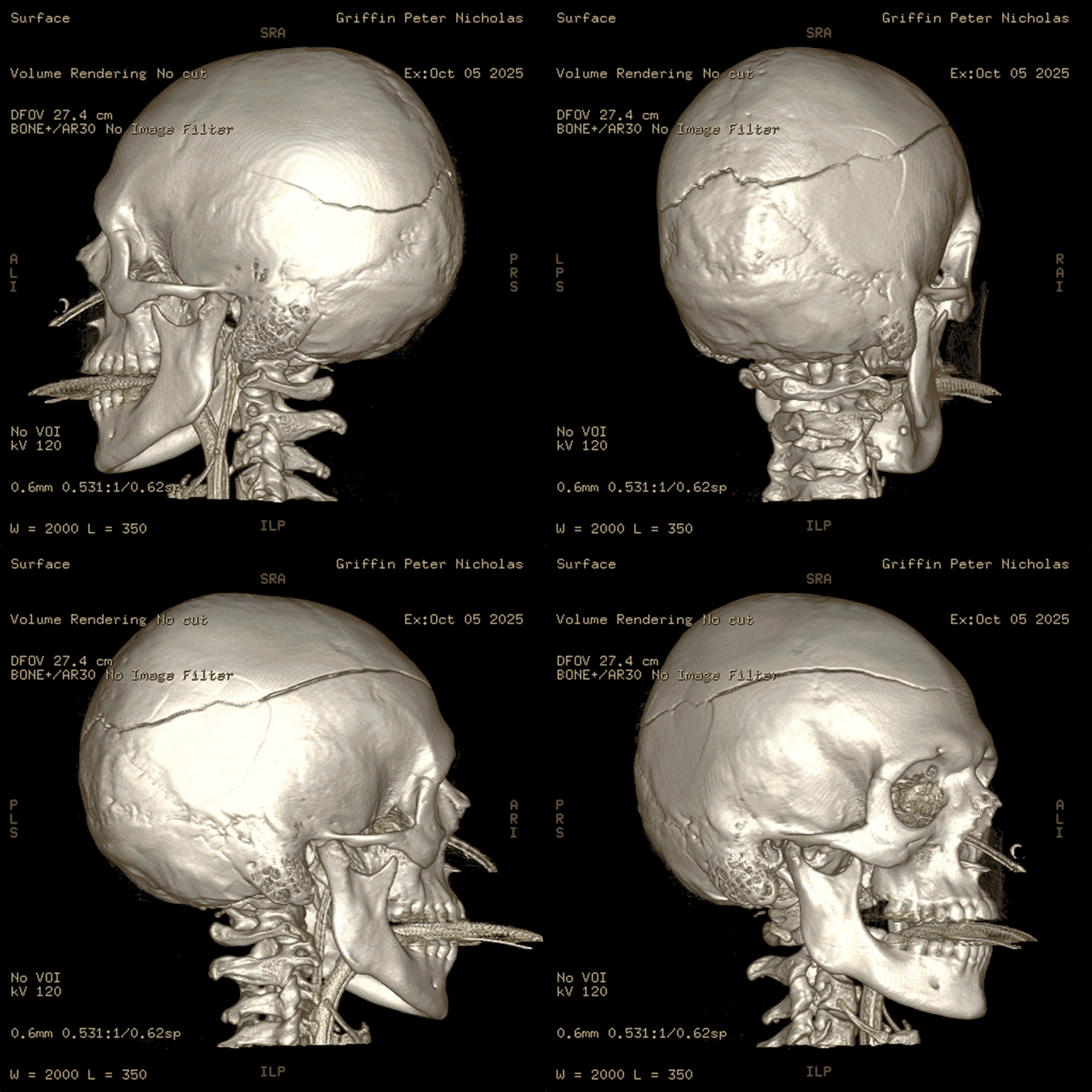
My skull was fractured from my forehead to the back of my head. There was swelling and bleeding around my brain and bruising to the brain itself. My injuries were so severe doctors didn’t know if I would survive.
I was intubated and rushed into emergency surgery. Dr. Safraz Mohammed, a neurosurgeon at The Ottawa Hospital, removed a 15 cm by 12 cm section of my skull to give my swollen brain room to expand. This was critical to keep blood flowing in my brain and prevent more damage.
Caring for the most complex neurosurgical cases
Peter’s care was led by a specialized neurosurgical team at The Ottawa Hospital. The hospital is home to nine neurosurgeons who provide specialized care for some of the most complex brain and spine conditions in the region. Their expertise extends far beyond Ottawa. The team handles the most complex neurosurgical cases across Eastern Ontario and Western Quebec and, through The Ottawa Hospital’s regional network, supports patients in northern and remote communities as far away as Baffin Island. For patients like Peter, that expertise can make the difference when a life-threatening brain injury requires immediate, highly specialized care.

With part of my skull removed, I was left with a significant dent in my head, and until the bone could be put back, I needed to wear a helmet to protect my brain.
I spent nearly three weeks in a coma in the ICU. While I have no memory of this, I know my care team worked to keep me alive while my family waited and hoped.
Slowly, I came out of the coma. I was confused and combative. I had a feeding tube, a tracheostomy to help me breathe, and other lines and tubes keeping me alive. I kept trying to pull them out because I didn’t understand what had happened.
I had no idea how much my life had changed. But my family were just so relieved to see me awake.
When I was stable enough, I was transferred to an inpatient unit. I was no longer fighting to survive, but I had a long road ahead to rebuild my strength and independence. Simple things I had always taken for granted, like getting out of bed, using the washroom, and taking a shower, suddenly felt like major accomplishments. I was completely dependent on others.
Regaining independence started with learning how to move again. My care team first used a lift to get me out of bed and into a chair. From there, I progressed to a standing device and eventually to a walker with someone beside me for support.
I remember my first solo walk down the hallway with a walker. It was only a short distance, but it was a sign I was getting stronger.
By then, I had spent 65 days in hospital and was ready to move to The Ottawa Hospital Rehabilitation Centre. Let me tell you, rehab was a full-time job. I worked with physiotherapists, occupational therapists, and speech-language pathologists every day.
Physiotherapy focused on my strength, balance, and coordination. I had foot drop because of nerve damage in my legs, which made it difficult to lift my feet. For a while, I needed braces on my legs to help me walk. Occupational therapy focused on everyday tasks like getting dressed, using cutlery, and showering.
But one of my biggest challenges was learning how to talk again. I knew what I wanted to say but couldn’t find the words. My speech-language pathologist helped me develop strategies to communicate and rebuild my speech.
When I think about how far my speech has come, it’s hard to believe. After the collision, I struggled to get simple words out and relied on my family to help me communicate. Now I can have a normal conversation. It’s one of the things I’m most proud of in my recovery.
When the collision happened, I was in the middle of renovating my house. While I was recovering, my dad and our community stepped up to finish it.
About 100 firefighters, paramedics, friends, and family volunteered to help. Some of the first responders had been at the scene of my crash.
I was absolutely blown away by the generosity of our community. I couldn’t thank them enough.


By February, my brain had healed enough to safely replace the piece of my skull, and I was more than happy to finally be able to take off the helmet that was protecting my head. The surgery went extremely well, and with that behind me, I felt like I had finally crossed a major finish line in my recovery.
Now, I’m looking forward to getting back to my normal life — spending more time with my friends and doing the things I love. Eventually, I’d like to return to work and drive again when it’s safe.
I’m incredibly grateful to my family, friends, our community, and everyone at The Ottawa Hospital who helped me get here. I’ll always be grateful to Dr. Mohammed and the care teams who were there for me when my life was hanging in the balance. I’m lucky to live in Ottawa and have access to this level of expert care. When I needed it most, the trauma, neurosurgical, and rehabilitation teams were ready for me.
I don’t remember the collision or much of what happened in the early days at the hospital. But I know how far I’ve come. And I’m looking forward to what comes next.


