
Published: June 2026
Read time: 4 min
Published: June 2026
Read time: 4 min
Cheryl Langill didn’t end up at our hospital’s Emergency Department because of one glaring symptom or obvious illness. Instead, a series of subtle changes over time gradually became impossible to ignore.
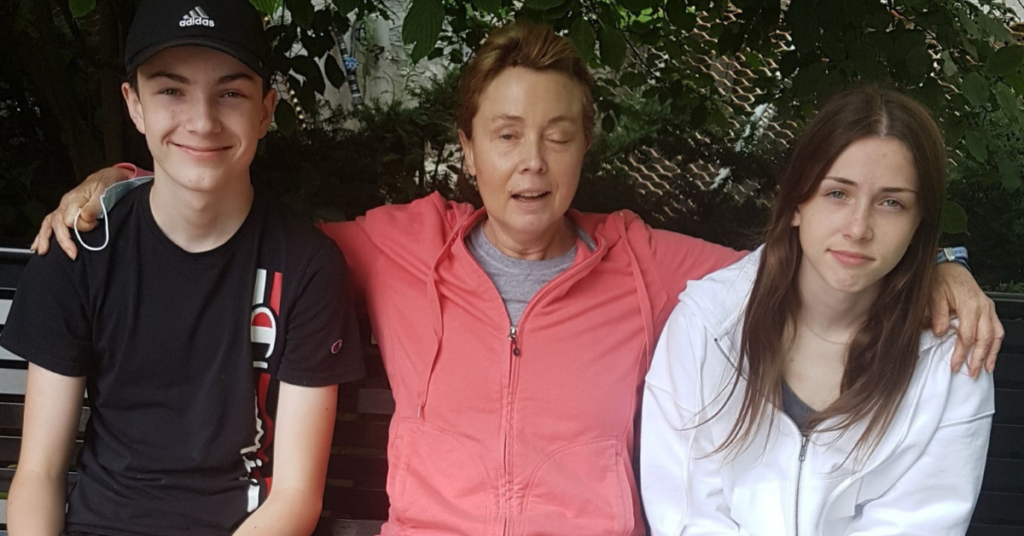
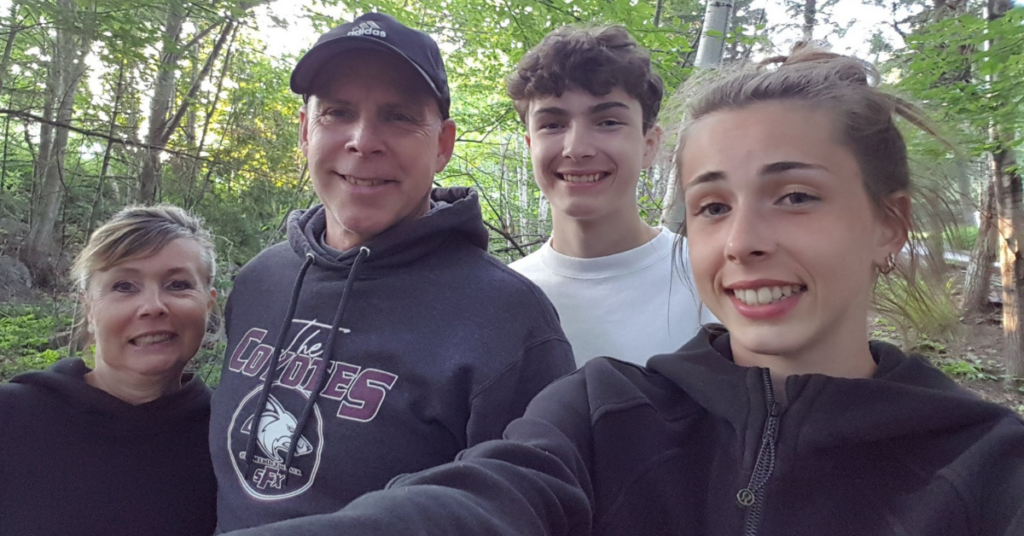
First, her husband, Steve, noticed shifts in her behaviour that just didn’t feel like the Cheryl he had known for 22 years. She was more irritable than usual and quick to become frustrated in ways that felt out of character.
“I didn’t recognize my wife anymore,” said Steve. Even their teenage children sensed something wasn’t right.
There were also physical changes. Cheryl experienced small facial spasms that would come and go. Then, during a routine eye exam, she learned the vision in her left eye had significantly deteriorated.
But even then, when her family raised concerns, Cheryl struggled to recognize how much had changed. From her perspective, nothing was seriously wrong. As the changes progressed, the impact on Cheryl’s daily life became harder to ignore. They even impacted her work performance, and eventually, she lost her job.
“I remember people telling me something wasn’t right, but I just didn’t see it,” said Cheryl. “I kept telling everyone I was fine because I felt like myself.”
On their own, Cheryl’s symptoms didn’t seem particularly alarming. But together, they told a different story — one that ultimately led to her husband bringing her to our Emergency Department in search of answers.
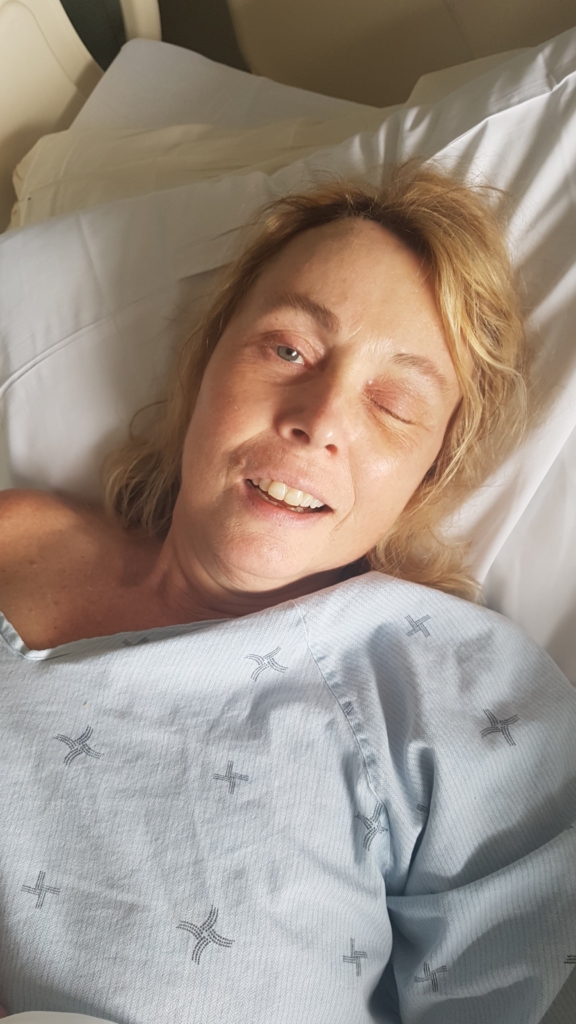
A life-altering diagnosis
What Cheryl’s care team discovered during that hospital visit in June 2021 sent shock waves through the Langill family.
A CT scan revealed a large brain tumour — a meningioma the size of a golf ball that had likely been growing undetected for years. Over time, the tumour began pressing against critical areas of her brain, causing the changes in vision and behaviour, and even limiting her ability to recognize something was very wrong.
“The tumour was located in the front part of the brain,” explained Dr. Safraz Mohammed, neurosurgeon at The Ottawa Hospital. “That area plays a significant role in personality, judgment, and behaviour.”
In Cheryl’s case, the tumour was also affecting her optic nerve, which explained the vision loss in her left eye.
Although the tumour was benign and slow growing, its size and location made it dangerous. Without surgery, her condition would continue to deteriorate, so a complex surgery was Cheryl’s only option.
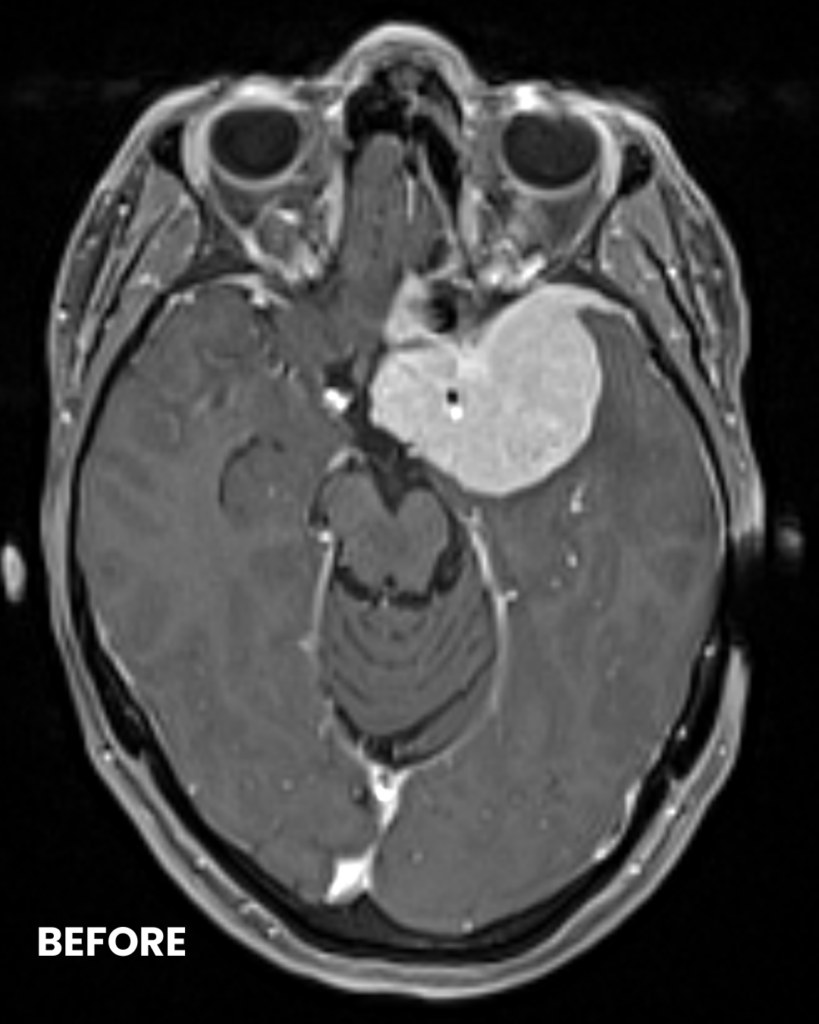
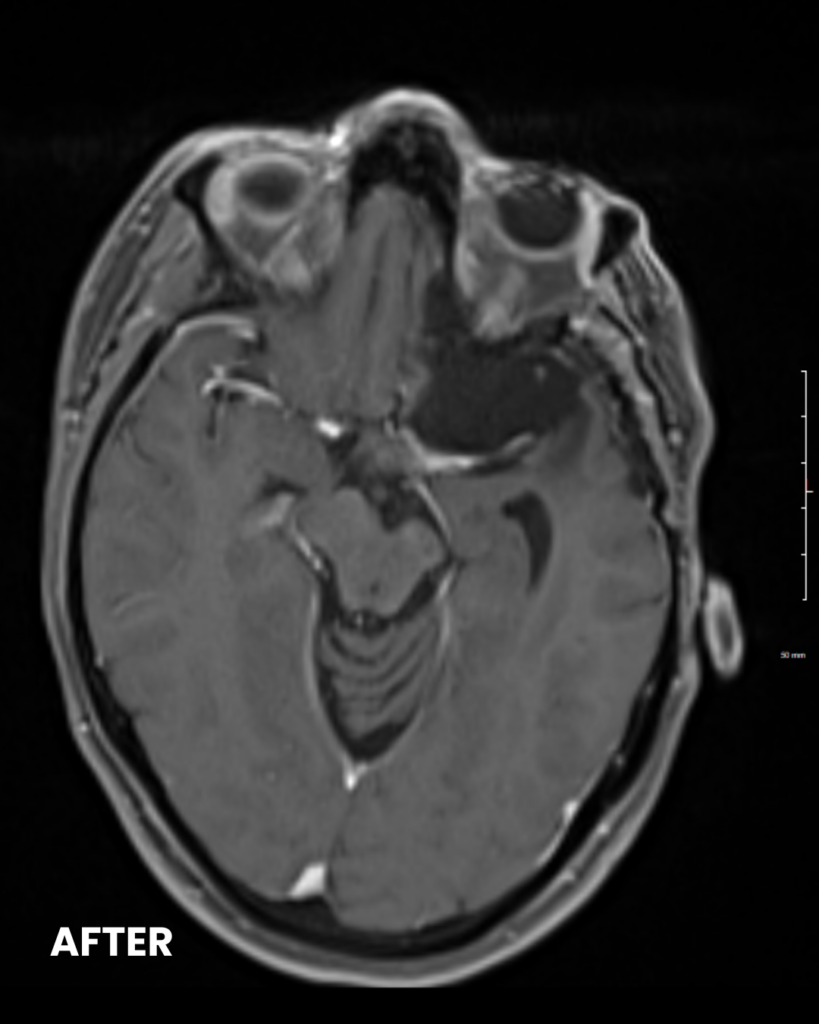
Left: Before surgery, Cheryl’s scan shows a large meningioma pressing on critical areas of the brain. Right: After surgery, most of the tumour has been safely removed, significantly improving her condition.
Planning for a high-risk surgery
Before moving forward, Cheryl’s care team acted quickly to stabilize her condition: medication to reduce swelling in her brain and anti-seizure medication to prevent further facial spasms.
At the same time, a highly detailed surgical plan was already taking shape. The procedure would require removing a portion of the front part of her skull and the bones around her left eye to safely access the tumour. From there, surgeons would use advanced tools, including an ultrasonic aspirator, to carefully break down and remove the tumour while preserving the surrounding brain tissue.
Meet Neurosurgeon Dr. Safraz Mohammed
This technology allows surgeons to target the tumour cells while protecting the healthy parts of her brain — a precision that is essential when operating in such a sensitive area.
“Every movement matters in brain surgery,” said Dr. Mohammed. “You’re constantly balancing how much you can safely remove while protecting the parts of the brain that make someone who they are.”
Inside the operating room
Just five days after arriving at our hospital, Cheryl was in the operating room for lifesaving surgery.
“I didn’t even know anything was wrong, and then suddenly I was preparing for brain surgery.”
— Cheryl Langill
“It was a lot to take in,” said Cheryl. “Just days before, I didn’t even know anything was wrong, and then suddenly I was preparing for brain surgery.”
Over the course of the complex and intricate eight-hour surgery, Dr. Mohammed and his team worked meticulously to remove the tumour, but a portion of it was compressing a critical artery that supplies blood to the brain.
Removing that portion of the tumour would reduce the chance of it continuing to grow, but operating near such an important artery required extreme precision — even the slightest disruption to blood flow could have serious consequences.
“This is an important part of the brain that affects movement and speech,” said Dr. Mohammed. “So, you’re not just thinking about the surgery in front of you — you’re thinking about what any decision could mean for the patient long term.”
The team made the decision to carefully proceed. During that process, Cheryl experienced a small stroke — a known risk in a surgery of this complexity. To prevent further harm, the team chose to stop short of removing the small piece of remaining tumour.
Despite the challenge, the surgery was considered a success. Most of Cheryl’s tumour had been safely removed, relieving the pressure on her brain and optic nerve, preventing further damage.
The road to recovery
In the days that followed, Cheryl began her recovery in hospital, supported by a team of physiotherapists, occupational therapists, nurses, and physicians who worked together to help her regain strength and independence.
“A patient’s vision doesn’t often return in cases like this.”
— Dr. Safraz Mohammed
Early signs of recovery were encouraging. Her vision drastically improved, and the changes in her personality and behaviour that had concerned her family started to fade.
“It was a big relief,” said Steve. “It felt like we were getting Cheryl back.”
For her care team, those early improvements were significant. “A patient’s vision doesn’t often return in cases like this,” said Dr. Mohammed. “This was a very positive outcome.”
Advanced radiation treatment
While surgery removed most of the tumour, Cheryl’s care didn’t end there.
In 2024, follow-up imaging showed the remaining portion of her tumour had started to grow. To address this, Cheryl underwent targeted radiation treatment at The Ottawa Hospital Cancer Centre.
This treatment used highly precise technology to deliver radiation directly to the tumour while minimizing exposure to surrounding healthy tissue. It offered a non-invasive option to help control tumour growth without the risk of another major surgery.
For Cheryl, it was an important additional step in managing her condition safely and effectively.
Looking ahead
Today, a year after her final radiation treatment, Cheryl’s most recent scans show her tumour has stopped growing. While her journey isn’t over, the outcome so far is encouraging.
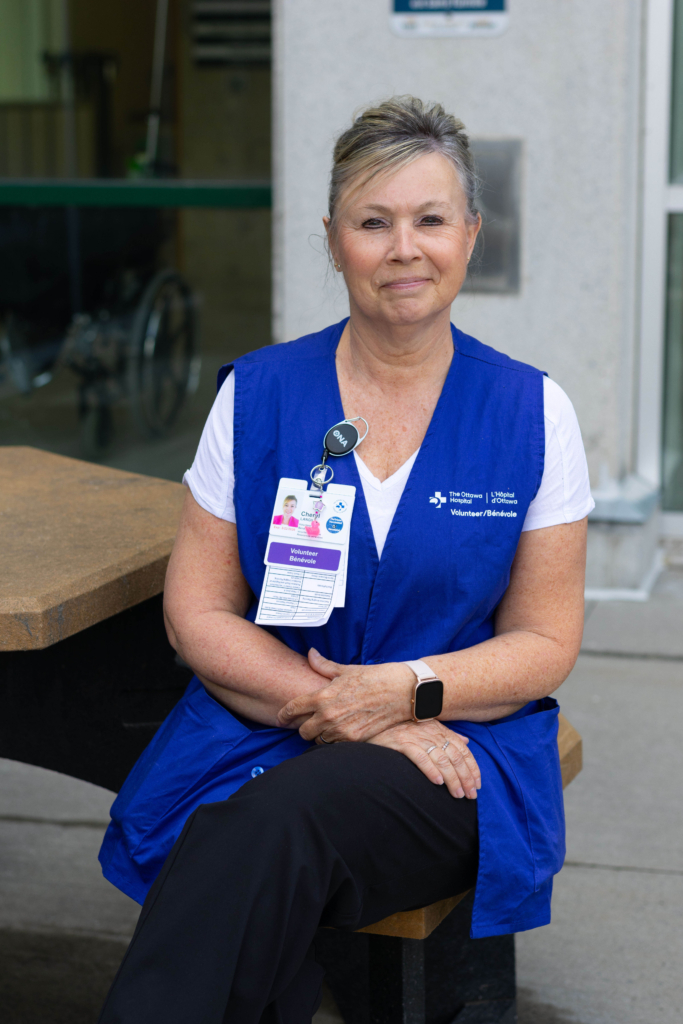
Now, she volunteers at The Ottawa Hospital Cancer Centre, supporting patients and families who are navigating their own difficult journeys — something that has become deeply meaningful to her.
“I’m so grateful for the care I received, and volunteering is my way of giving back to the hospital that saved my life.”
— Cheryl Langill
“I know how overwhelming it can feel to be a patient,” said Cheryl. “I’m so grateful for the care I received, and volunteering is my way of giving back to the hospital that saved my life.”
For her family, the difference is already clear. It’s a reminder of how far Cheryl has come and what was made possible through expert care, advanced technology, donor support, and a team that was ready when it mattered most.