

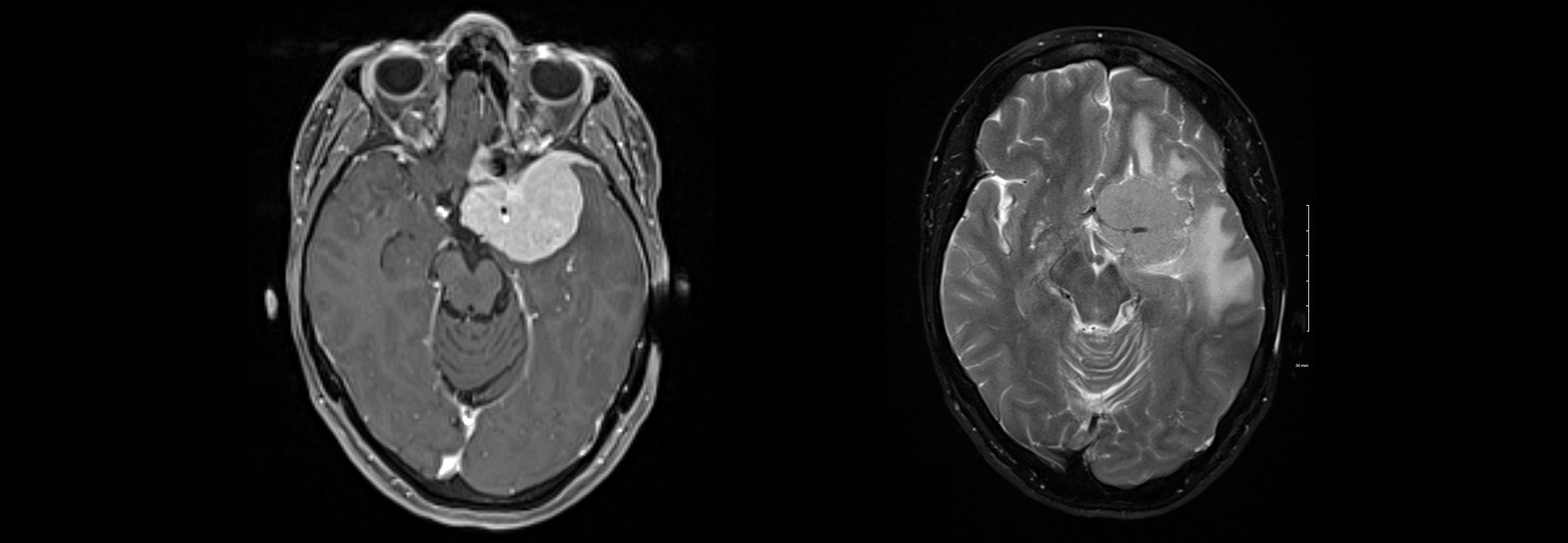
All about meningioma
Meningioma is a type of brain tumour with a long and storied history. The first evidence we have of meningioma is from a 365,000-year-old fossil discovered in 1933 called the Steinheim skull, which showed changes consistent with meningioma growth. But, the earliest written came from an autopsy in 1614, which revealed a meningioma in a knight’s brain. From there, developments sped up considerably, with the first surgery to remove a meningioma in 1770, and improvements in surgical techniques, anesthesia, and hygiene bringing treatment into the modern era by the 20th century. And by the turn of the 21st century, most patients with meningioma would live long lives after having it removed, including celebrities like Elizabeth Taylor and Mary Tyler Moore!
What are meningiomas?
Meningiomas are tumours that form in the protective membranes that cover the brain, called the meninges. The vast majority of meningiomas are benign, meaning non-cancerous and not at risk of spreading to other parts of the body, but some can be malignant and have a higher propensity to grow rapidly and invade the brain. They are categorized by Grades 1, 2, or 3, with Grade 1 indicating benign and Grade 3 indicating malignant.
Meningioma is more common in people over 50, with risk increasing especially over 65. Exposure to radiation may increase the risk of developing meningioma. And people with a higher body mass index (BMI) are at a higher risk of developing meningioma. Rarely, these can be due to certain genetic conditions, such as neurofibromatosis Type 2.
Meningioma is the most common primary brain tumour in women, while glioblastoma is the most common primary brain tumour in men. Women are diagnosed with meningiomas at about double the rate of men, likely due to hormones such as estrogen and progesterone.
What are the symptoms of meningioma?
Meningiomas don’t always cause symptoms, especially in their early stages, but as the tumours grow, some common symptoms may emerge depending on the location of the tumour in the brain. These include:
- A headache that’s worse in the morning
- Vision changes or loss
- Loss of smell
- Hearing loss or ringing in the ears
- Seizures
- Personality or behaviour changes
- Shifts in thinking or memory
- Difficulty speaking
- Trouble understanding words
- Weakness on one side of the body
- Balance issues or dizziness
- Nausea or vomiting
- Fatigue
How do we treat meningioma?
Meningiomas are diagnosed through a neurologic exam and by using imaging tests such as CT and MRI scans of the brain. A common first step in treating a suspected low-grade meningioma is to watch and wait. If the meningioma starts growing and causing issues, then surgery is usually indicated. Radiation therapy would be recommended if the tumour cannot be removed with surgery, or in the post-operative setting for selected Grade 2 and all Grade 3 tumours, or if the tumour recurs after surgery. At The Ottawa Hospital, we have cutting-edge tools like the CyberKnife and medical linear accelerator (LINAC), both of which can help deliver precise, high-dose radiation to tumours like meningiomas, increasing the effectiveness of the treatment while limiting the side effects of radiation on surrounding normal tissues. These donor-funded tools help us give our patients a better chance at more tomorrows, with fewer long-term effects.
Support The Ottawa Hospital today and help bring more cutting-edge treatments to patients tomorrow.