
All about fluorescence-guided surgery and 5-ALA
“Pink drink,” glowing tumours, and high-tech microscopes might sound like things from a sci-fi movie. But today, they are real tools helping neurosurgeons remove dangerous brain and spinal cord tumours with greater precision.
This technology, called fluorescence-guided surgery, is improving outcomes for patients here in Ottawa.
What is fluorescence-guided surgery?
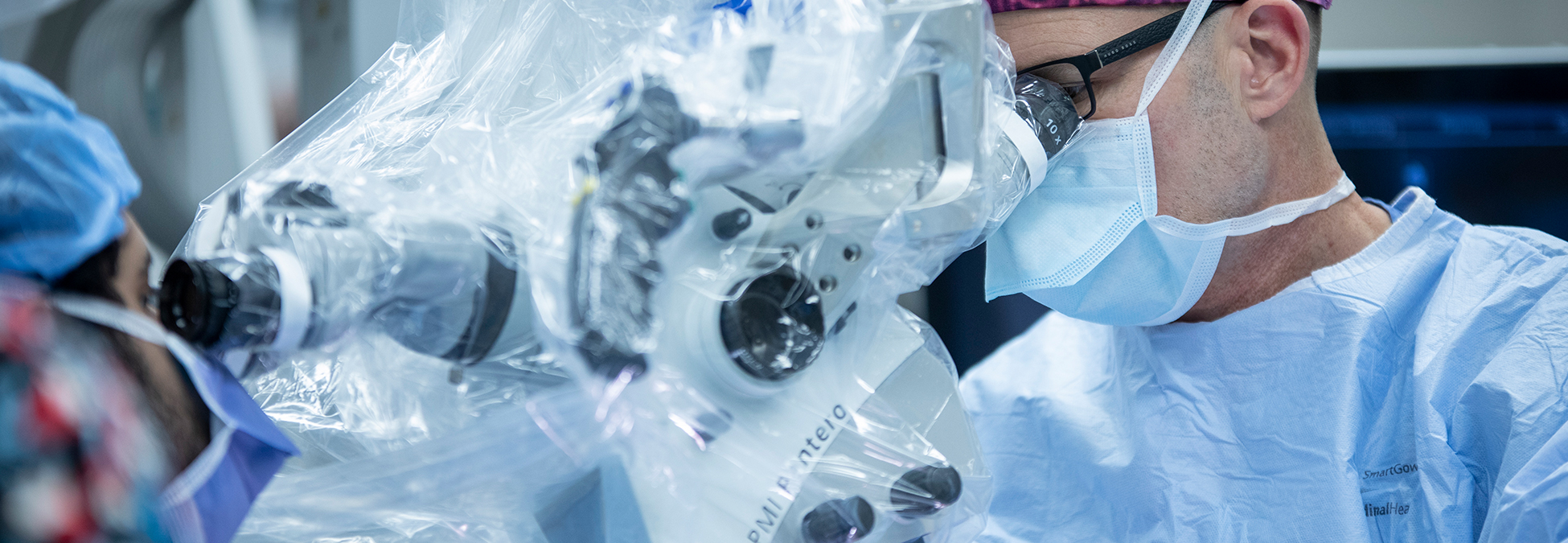
Fluorescence-guided surgery is a technique that uses special substances that glow under certain types of light. Surgeons combine these substances with advanced microscopes to better see the areas they are operating on.
The idea of using fluorescence in medicine has been around for more than a century. In 1871, a scientist named Adolf von Baeyer created a glowing compound called fluorescein, which was later used in many scientific and medical fields.
At first, fluorescence imaging was mainly used in eye care and in studying blood vessels. Over the past 30 years, however, the technology has advanced rapidly. Today, it is becoming an important tool in brain tumour surgery.
Recently, surgeons at The Ottawa Hospital used fluorescence-guided surgery to help remove a cancerous tumour in the spinal cord — a huge leap forward for patient care in Canada.
What is the “pink drink” (5-ALA)?
Before surgery, the patient drinks the solution. After it is absorbed by the body, the compound collects mainly in brain tumour cells rather than in healthy tissue.
During surgery, the neurosurgeon uses a special microscope that shines blue light onto the surgical field. Under this light, tumour cells glow a bright fluorescent pink, while normal tissue remains dark.
This contrast helps surgeons clearly see where the tumour is and where healthy tissue begins.
How is fluorescence-guided surgery helping patients?
Being able to see tumour cells more clearly can make a major difference during surgery.
With fluorescence-guided surgery and 5-ALA, surgeons are often able to remove more of the tumour safely. In many cases, the rate of complete tumour removal has increased from about 30% to as high as 70%.
“5-ALA is an absolutely brilliant tool that allows us to remove more cancerous cells during surgery, improving outcomes, longevity, and quality of life for our patients,” according to Dr. Safraz Mohammed, neurosurgeon at The Ottawa Hospital. “Using 5-ALA in the spinal cord allows us to push surgical boundaries that have not previously been reached in Canada, and that is incredibly exciting for both surgeons and patients.”
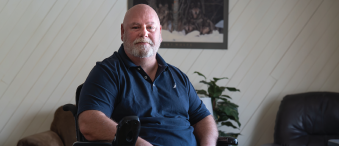
Hear how a Canadian‑first surgery at The Ottawa Hospital gave a veteran hope against a rare spinal cord glioblastoma
Supporting innovation in patient care
Innovations like fluorescence-guided surgery are made possible through research, advanced technology, and the generous support of donors.
When you support The Ottawa Hospital Foundation, you help equip surgeons with the latest tools to improve patient outcomes and bring groundbreaking treatments to patients who need them most.
Together, we are helping create a brighter future for patients and their families.