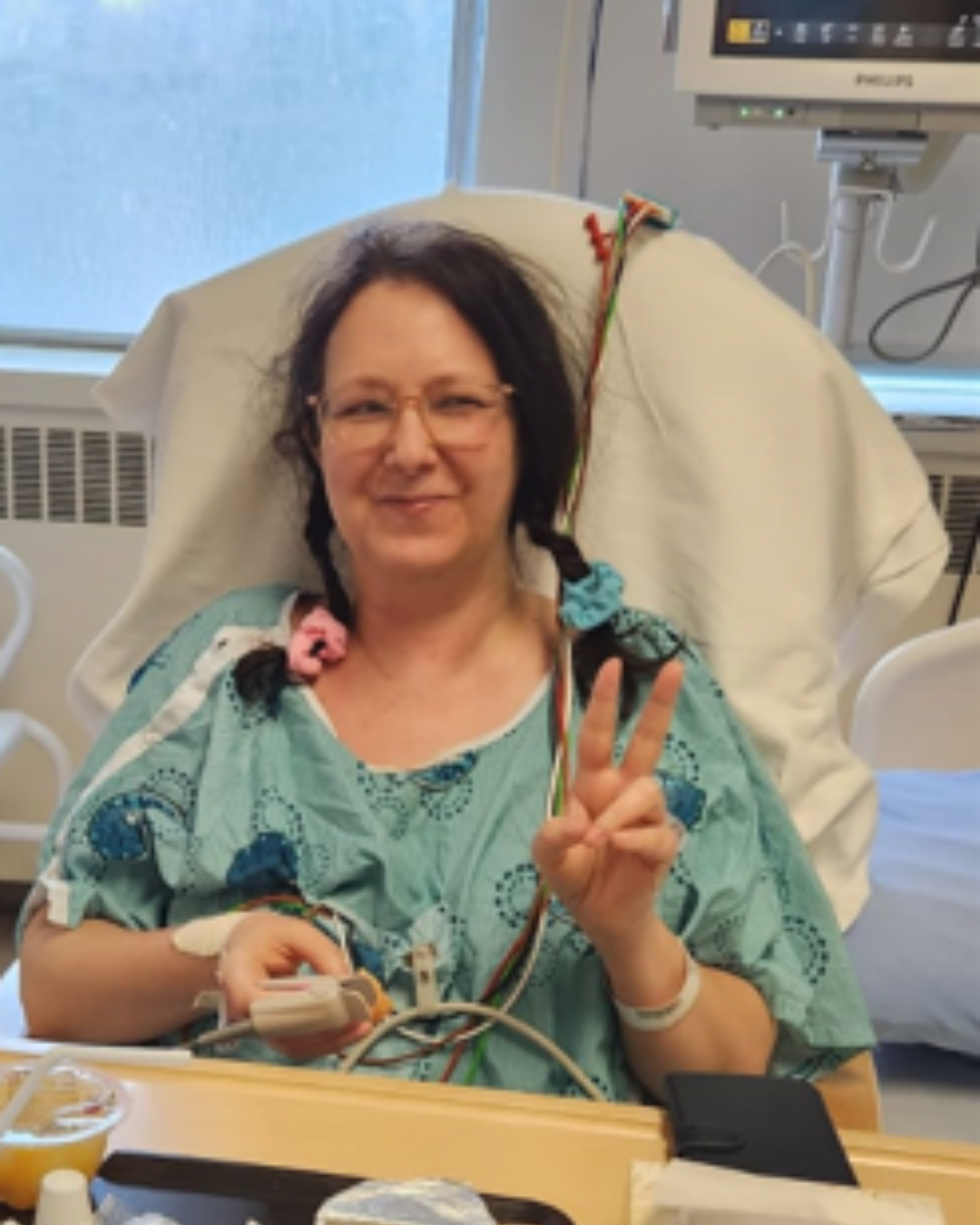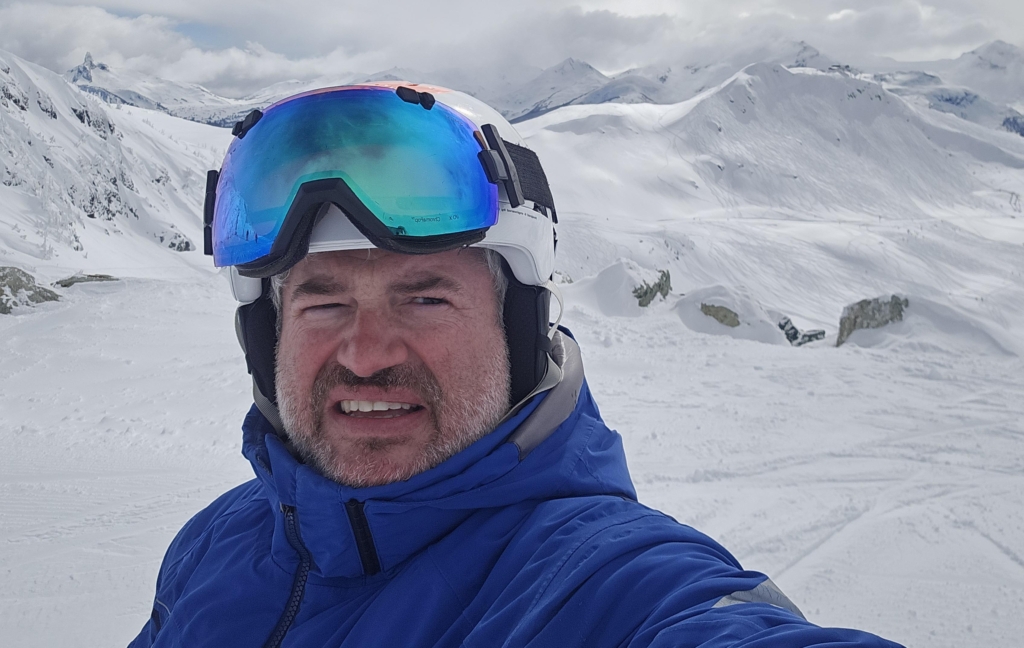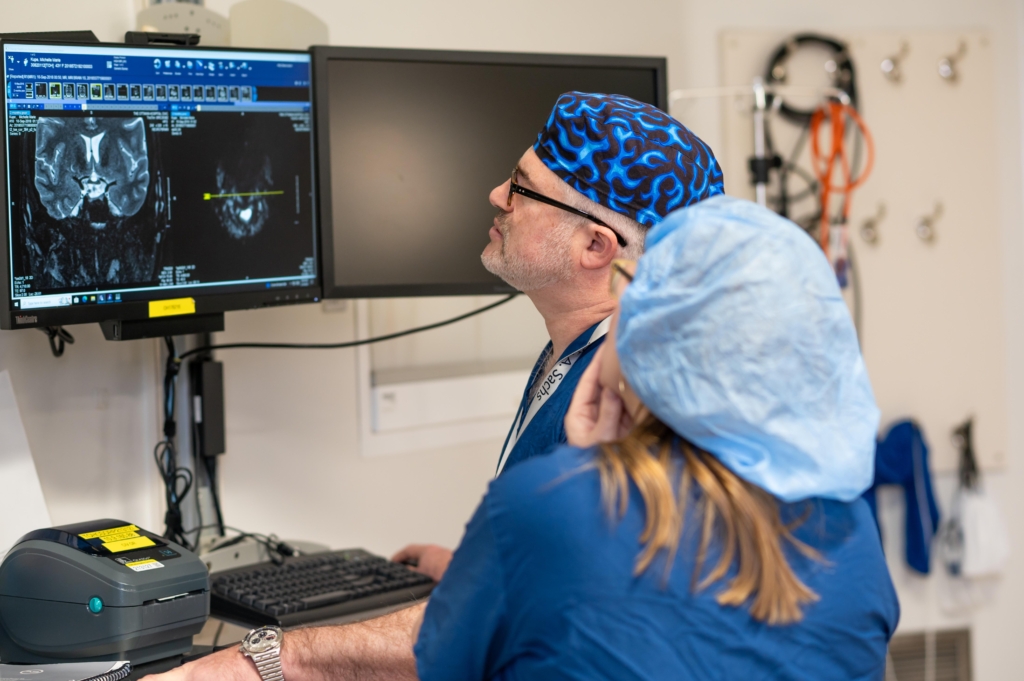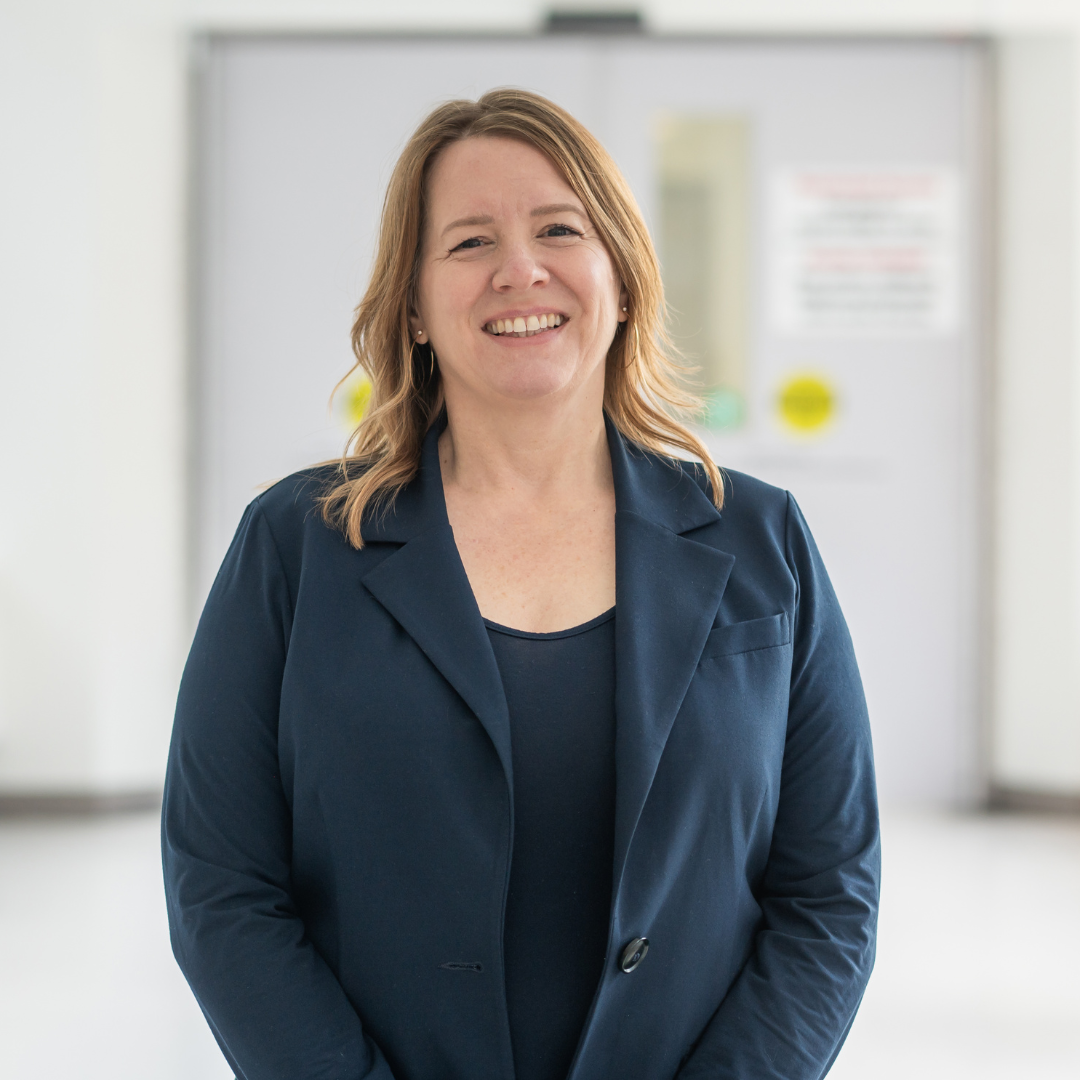
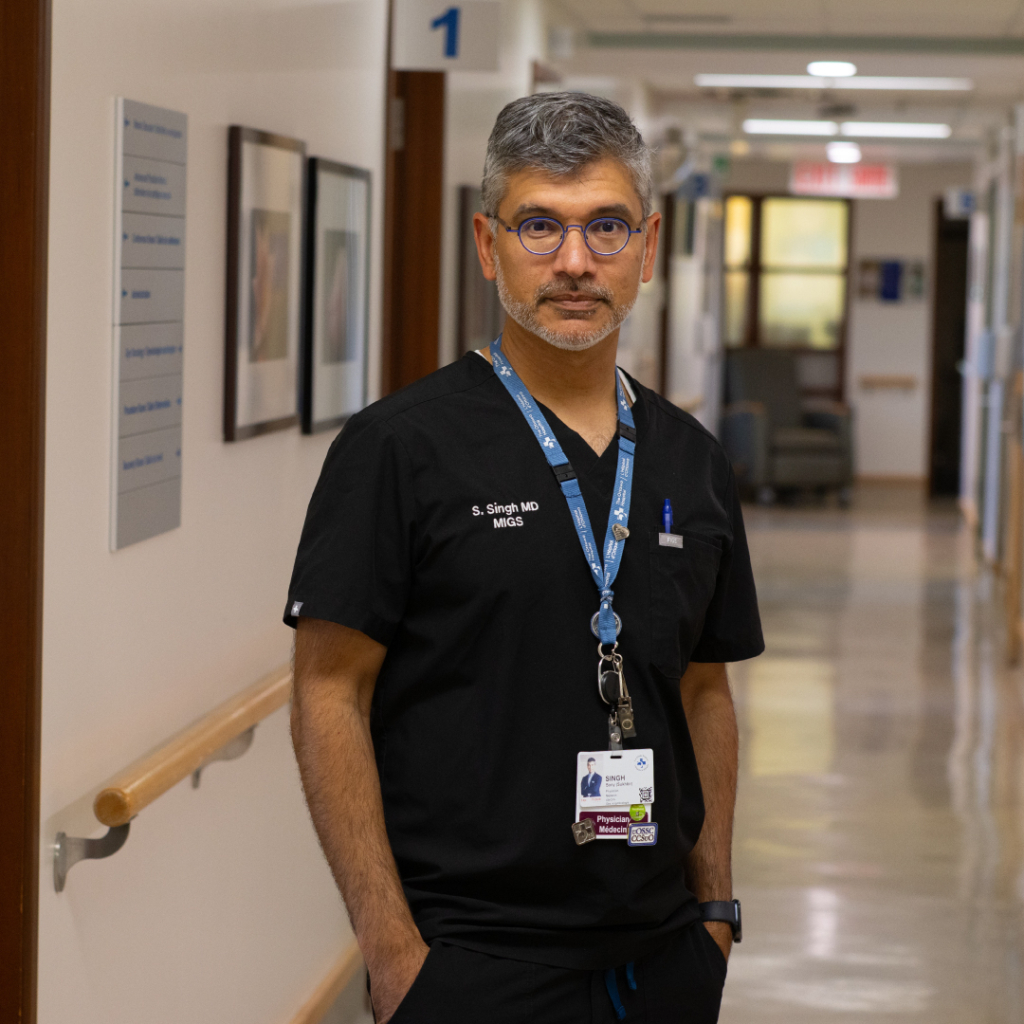
Endometriosis is a common condition, but Dr. Sony Singh’s dedication to improving endometriosis care is anything but common.

As an Associate Scientist and Department Head for the Department of Obstetrics, Gynecology, and Newborn Care at The Ottawa Hospital, he is changing the way we diagnose and treat endometriosis. For the millions of women in Canada suffering from the condition, Dr. Singh’s minimally invasive surgical approaches, advanced imaging, and practice-changing research promise a bright future with better care.

Find out what sign convinced him to pursue obstetrics and gynecology, and what might surprise you about endometriosis.

Q: What were your early years like?

A: I grew up in the Toronto area and then moved out to Brampton, where I attended high school. My parents had humble beginnings and were both factory workers.

Growing up, my biggest hobby was advocacy. As a teenager, I got involved in my high school’s environmental club, way back in the late ’80s and early ’90s. I was also the student council president, and I was always trying to advocate for racial and ethnic diversity at a time when we were just starting to understand the topic.

Q: Who were your biggest influences as a youth?

A: I had strong women role models in my mom, my grandmother, and several high school teachers. My grandmother inspired me so much as someone who couldn’t read or write, was married at 14, had none of the privileges anyone else had, and had nothing to give other than pure love. She lived until 100! I realized very early on that society wasn’t treating women with the same respect as they would men.

Q: What did you want to be when you grew up?

A: I didn’t picture doing medicine! I pictured doing some sort of leadership in the community, maybe being a police officer or running a not-for-profit.

Q: When did you decide to pursue medicine?

A: In high school, I fell while rollerblading and had a huge laceration on my right leg — I still have the scar! Rollerblades had just been introduced, and I took them down a hill and decided to jump on some grass and slide down, but I fell right on a broken beer bottle. I remember going to the emergency room in Brampton, and as the doctor was sewing it up, I was just fascinated by him cleaning it up and taking care of me. That was the day I first thought of going into medicine.

In my undergrad, I did Life Sciences at Queen’s University in Kingston, Ontario, and I was doing quite a bit of work in research, working with animal models to look at infertility care and how stress causes difficulties getting pregnant. I also did some work in orthopedic trauma surgery. That’s when I knew I wanted to go into medicine, and I applied and got into medical school at Western University in London, Ontario.

Q: How did you decide to specialize in obstetrics and gynecology?

A: I had an interest in women’s health early on, and I was drawn from a young age to speak up against injustice and join whatever support I could for women. And at Queen’s, I ran something called their sexual health resource centre, and we focused on education around women’s health and advocacy.

During my undergrad and at Western, I was considering obstetrics, but I was also thinking about doing family medicine.

Then, in my fourth year as a medical student, I was visiting my sister-in-law, and she went into labour. Suddenly, she said she felt pressure, then she said, “It’s coming!” As a medical student, I knew what to do, and I delivered my niece right there in the bathroom.

I really needed a sign, and this was the sign that made it clear that obstetrics and gynecology was what I wanted to do. My niece is now doing their master’s at the University of Ottawa!
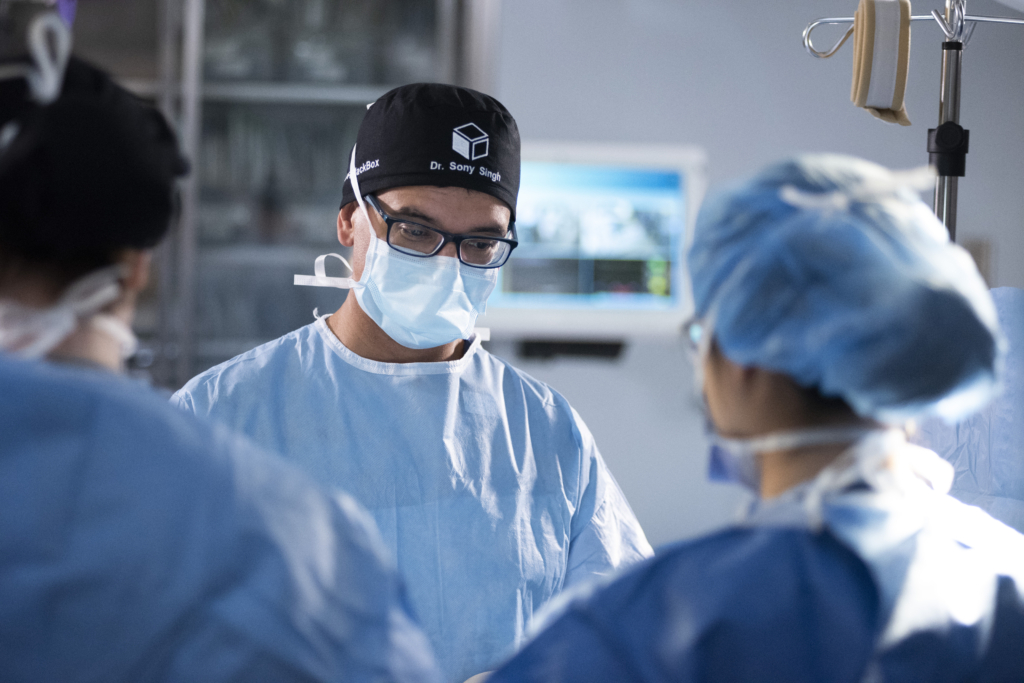
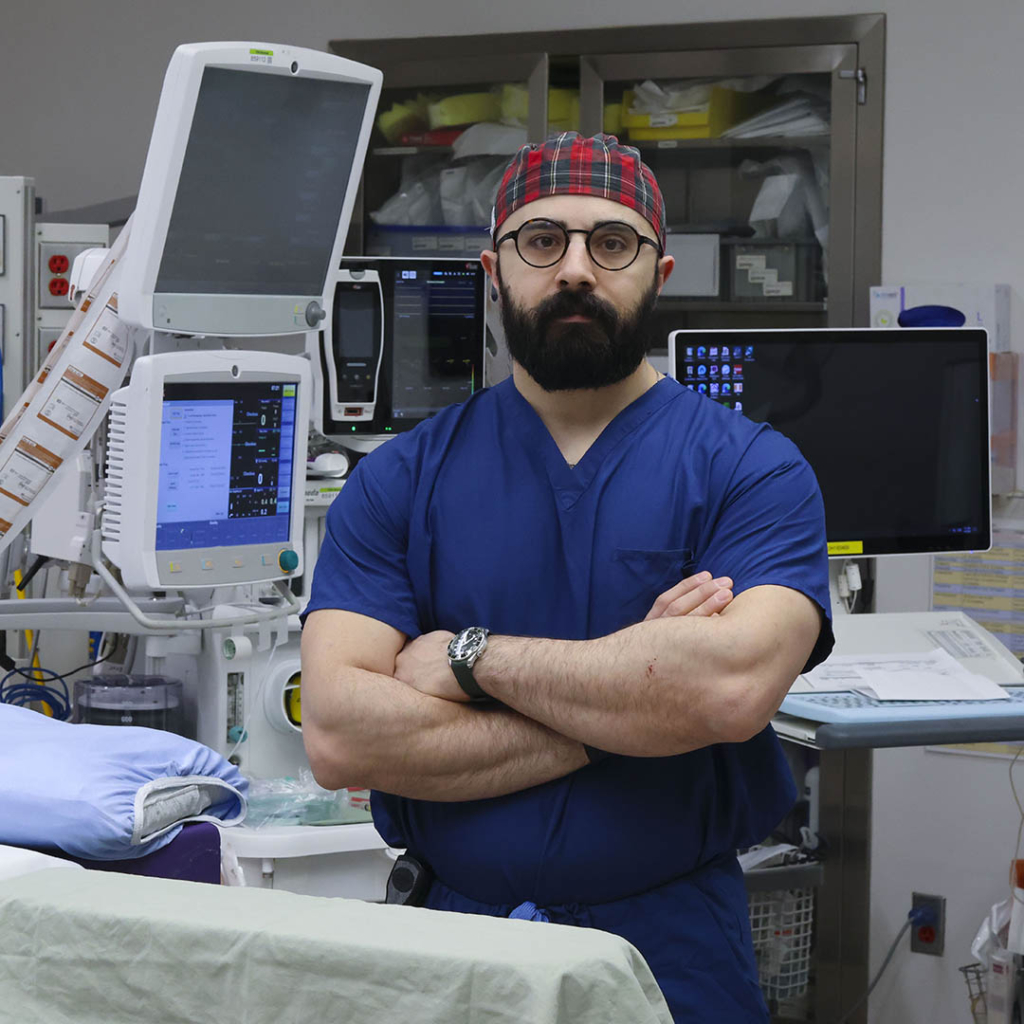
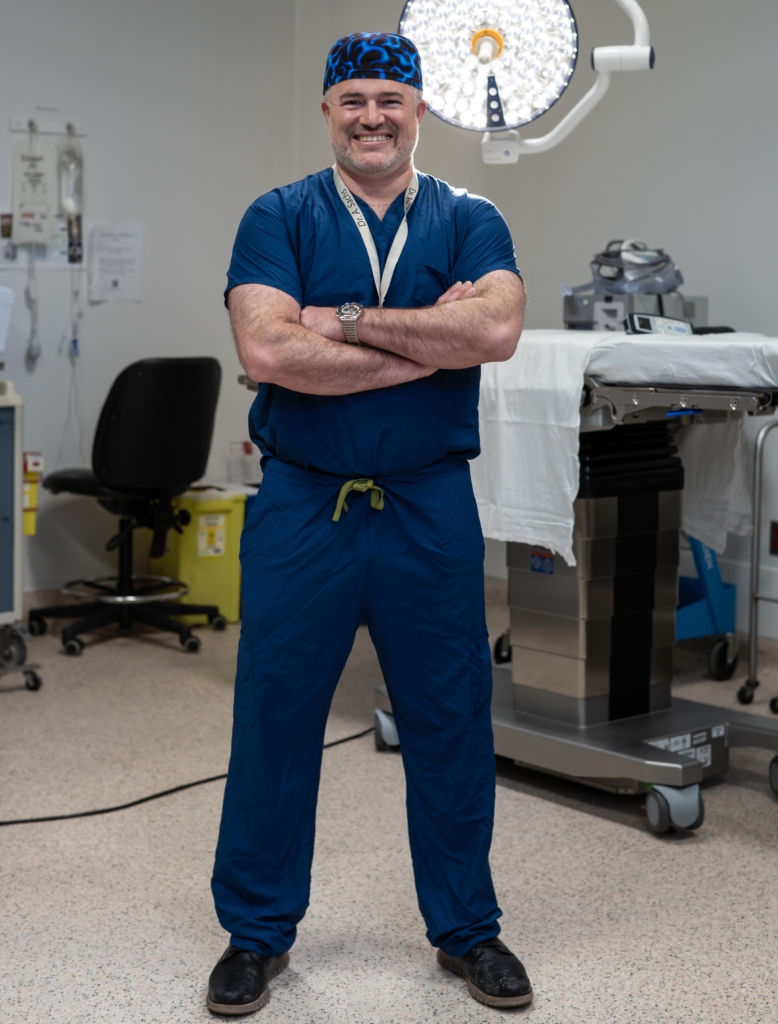
Dr. Singh in the operating room

Q: Are you a superstitious person?

A: I would say a little bit. I think there’s a reason for everything. I’m not religious, but I’m spiritual, and I think a lot of things that happened to me nudged me in the right direction.

Q: What exactly is endometriosis?

A: Endometriosis is a common condition that can impact women and people with uteruses. It is tissue like the lining of the uterus, but growing elsewhere in the body, often resulting in pain and/or difficulty getting pregnant.

Q: What is something unusual or surprising about your field of study?

A: Something I wish people knew about endometriosis is that it can affect almost every system of the body. I developed an expertise in endometriosis during fellowship training in Toronto and Australia back in 2005–2007, and at the time very little was known about the disease — despite the fact that it’s been around for a millennia.

“It’s a real once-in-a-lifetime privilege to advance the treatment and diagnosis of it here, locally.”

— Dr. Sony Singh
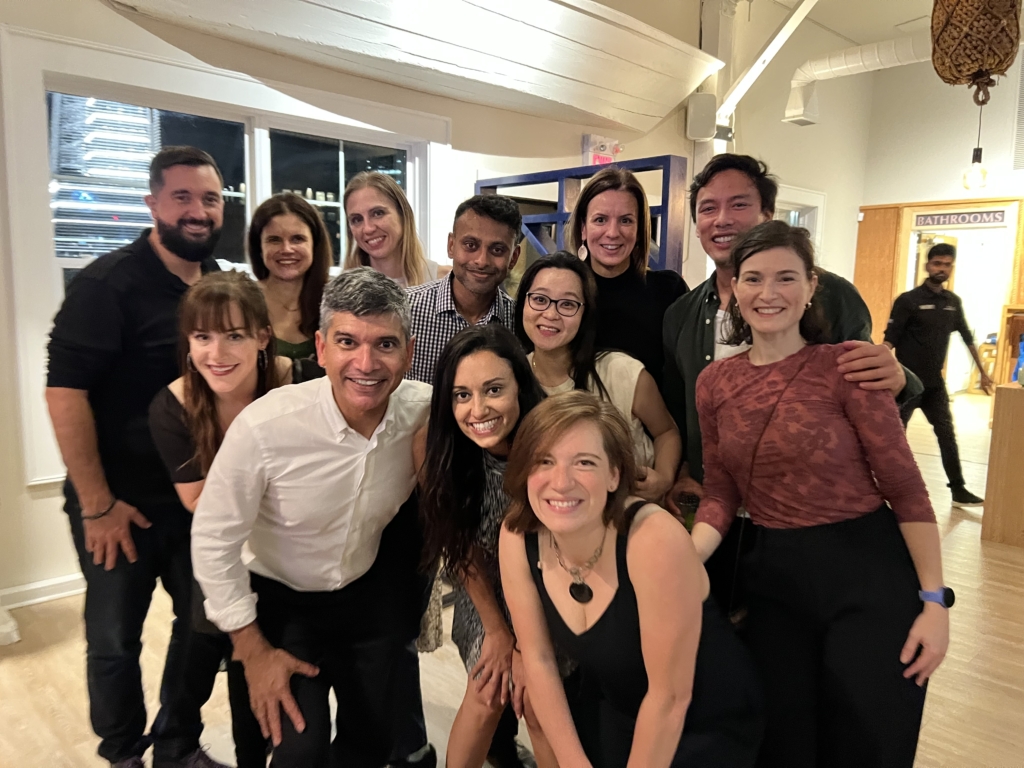
Minimally Invasive Gynecologic Surgery (MIGS) fellows

It’s a fascinating disease impacting millions of women, but we’re just at the beginning of understanding endometriosis. It’s a real once-in-a-lifetime privilege to advance the treatment and diagnosis of it here, locally. But we have so much further to go.

Q: How has our understanding of endometriosis changed since you first started out?

A: The biggest gain has been greater awareness amongst the public, because education is key. Back in high school, when we talked about periods, we didn’t learn anything about endometriosis. Today, they’re learning about that in high schools.
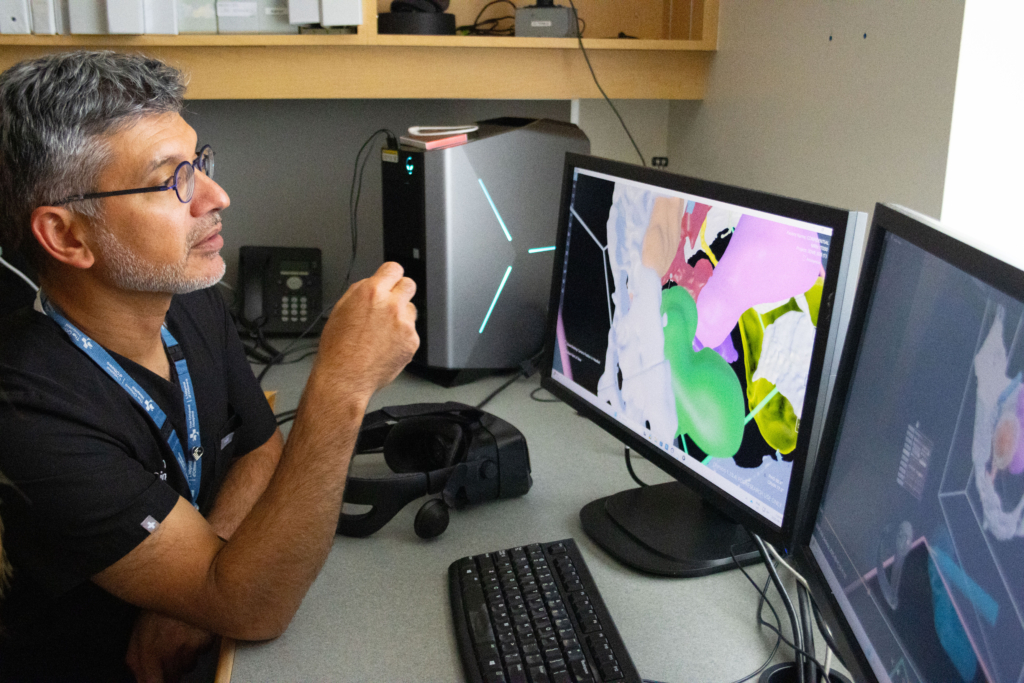
The second big development has been in imaging. The ability to do higher quality imaging is helping us pick up the disease better.

“We’ve not only built this program here at The Ottawa Hospital, but we’ve taught others, and it’s expanded far beyond us.”

— Dr. Sony Singh

Third, I’m now able to learn and teach more advanced surgical techniques to help manage this disease. Our fellowship that I started here around 2008 has produced some of the best endometriosis experts working in Canada. We’ve not only built this program here at The Ottawa Hospital, but we’ve taught others, and it’s expanded far beyond us.

Q: What would your advice be for someone recently diagnosed with endometriosis?

A: I’d tell them they’re not alone. That this is a common condition and that their pain and experience are valid. Getting access to care is a number one priority, and we have excellent care in terms of diagnosis and treatment. I’d also tell them they have to advocate for that care, because our medical system is still struggling to understand the disease; getting help can be tough, but keep on fighting to get that access.

Q: What made your recent case with Danika Fleury special?

A: Danika’s case is actually quite common in that she had a delayed diagnosis. There are so many women like Danika struggling out there with endometriosis but not getting a diagnosis. The time between symptoms and receiving care was seven years before the pandemic, but after the pandemic, it got worse. This delay is due to a lack of education, guidance, and information at the primary care level, and a lack of access to specialists who can manage it once it’s diagnosed.

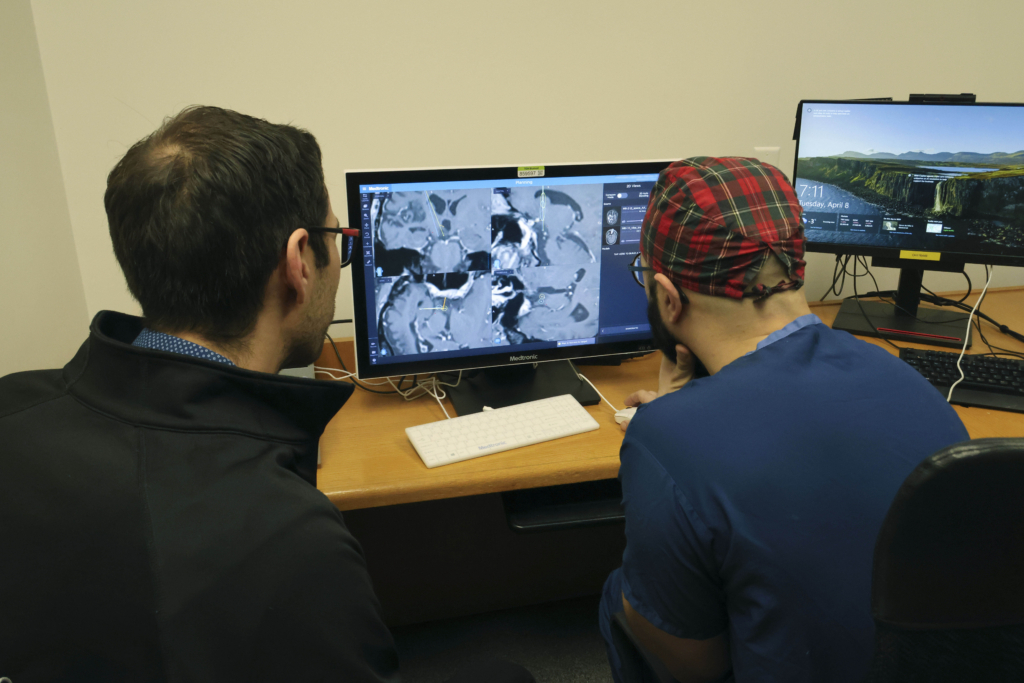
Once we saw Danika, though, we were able to use advanced imaging expertise, thanks to a new radiologist we recently recruited. It’s a disease that’s just supposed to be “period problems,” but we were able to see that her endometriosis was invading her pelvic nerves, and that’s why she was having difficulty walking and moving. It caused significant damage to her muscles on the left side of her body. We also created a 3D image to use in a virtual reality model to help me and my team practice and understand where the disease was so we could target it while minimizing harm to surrounding tissues.

It really illustrates that the future is bright for those struggling with endometriosis and people like Danika.
Q: How does community support help your patients?

A: Community support is where this all started. About 15 years ago, we got donations from Shirley Greenberg herself and some other community donors, and it raised $1 million to advance minimally invasive gynecology at The Ottawa Hospital. That set the trajectory for the hospital becoming a leader in minimally invasive surgery. We were able to build this incredible program with amazing colleagues. Community support allowed us to get the equipment and move things forward, and it has continued to allow us to increase our education and continue our work.

Next, I want to create a centre of excellence for endometriosis with provincial and federal funding to help lead a network of endometriosis research and care across Canada.

Q: What does your current research focus on?

A: I currently have several layers of research: the basic science (why this happens, how to prevent it, etc.); clinical research (what’s the patient experiencing, how to use imaging); clinical trials (which medical therapies work best); and working with other disciplines to find broad solutions.

It’s really a multidisciplinary disease that requires a multidisciplinary approach; I’ve worked with every surgical and imaging expertise in the hospital for this condition.

Q: What’s your favourite part of working at The Ottawa Hospital?

A: The people. I’m so proud to be working at The Ottawa Hospital. It’s a culture I came into in 2007 that prioritizes the patient experience, quality of care, and excellence. This flows through every level, from the clerk you meet to the volunteer down the hall to the nurses in the clinic to the healthcare providers. There’s no other place I’d rather work. When I walk into a patient room, it’s all about them, and they know we want to help them. I remind myself to be grateful all the time.

Q: Where would we find you when you’re not at work?

A: On the water on a kayak or on a bike on one of the many trails in the city. I am first and foremost a father and a husband, and I have three wonderful teenagers and a wife who’s an engineer.
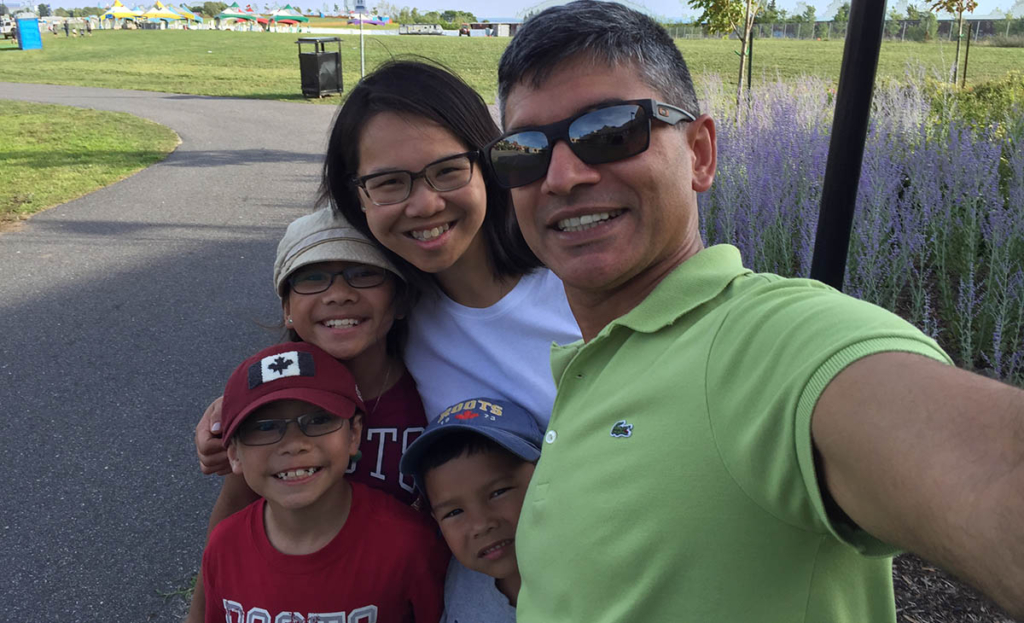
Dr. Singh and family in North Bay
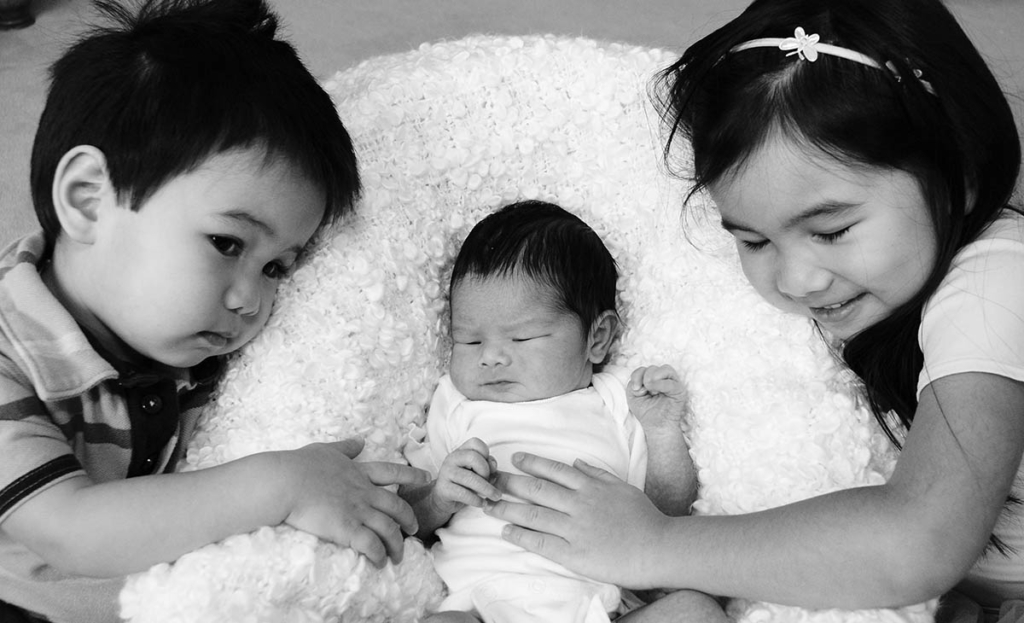
The Singh kids
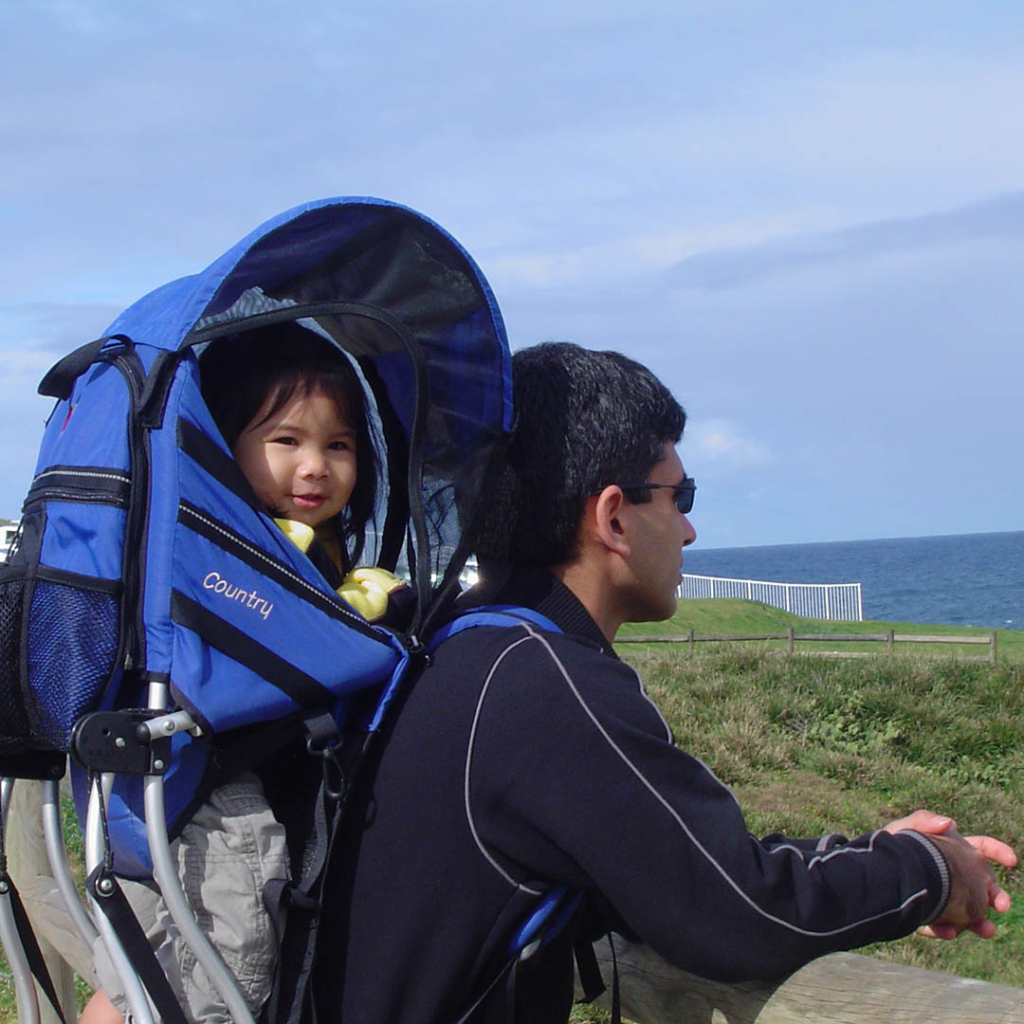
Dr. Singh with his daughter Amelia in Australia
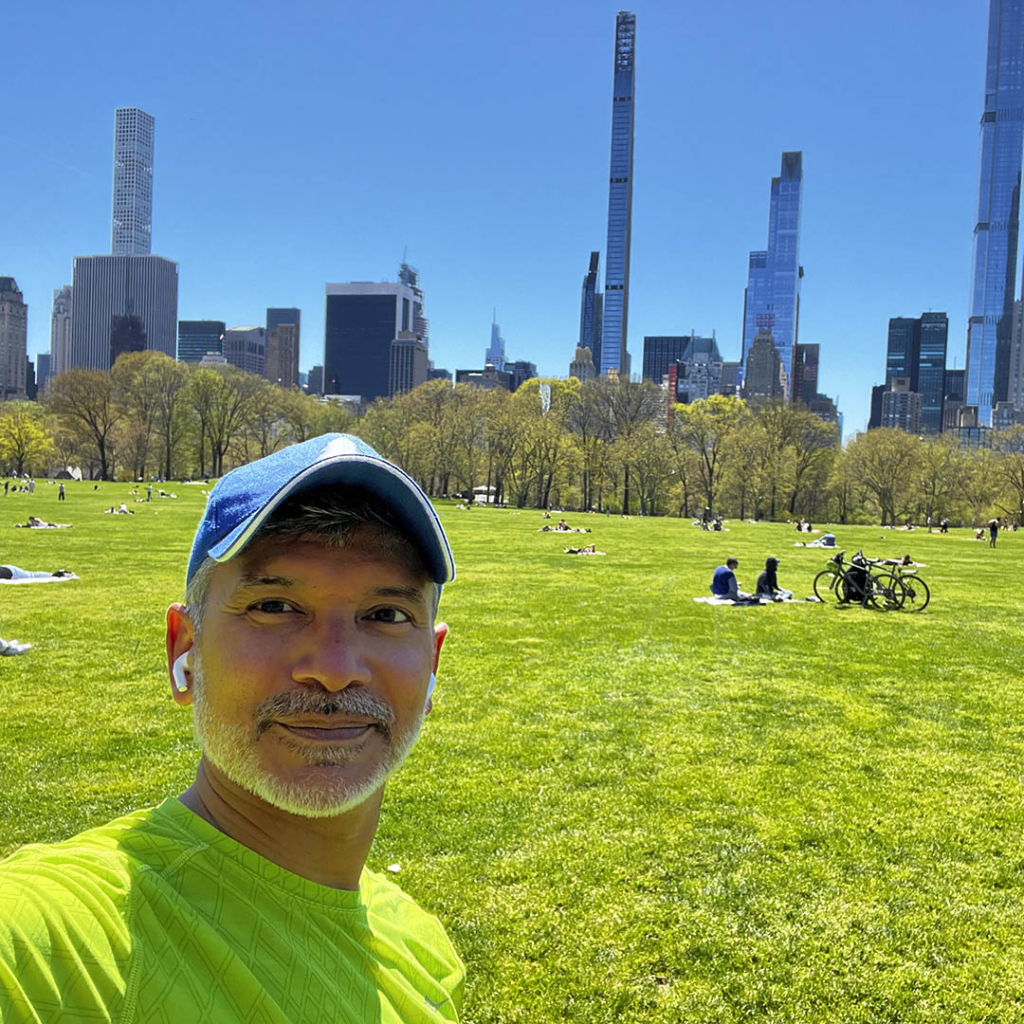
Marathon training in NYC
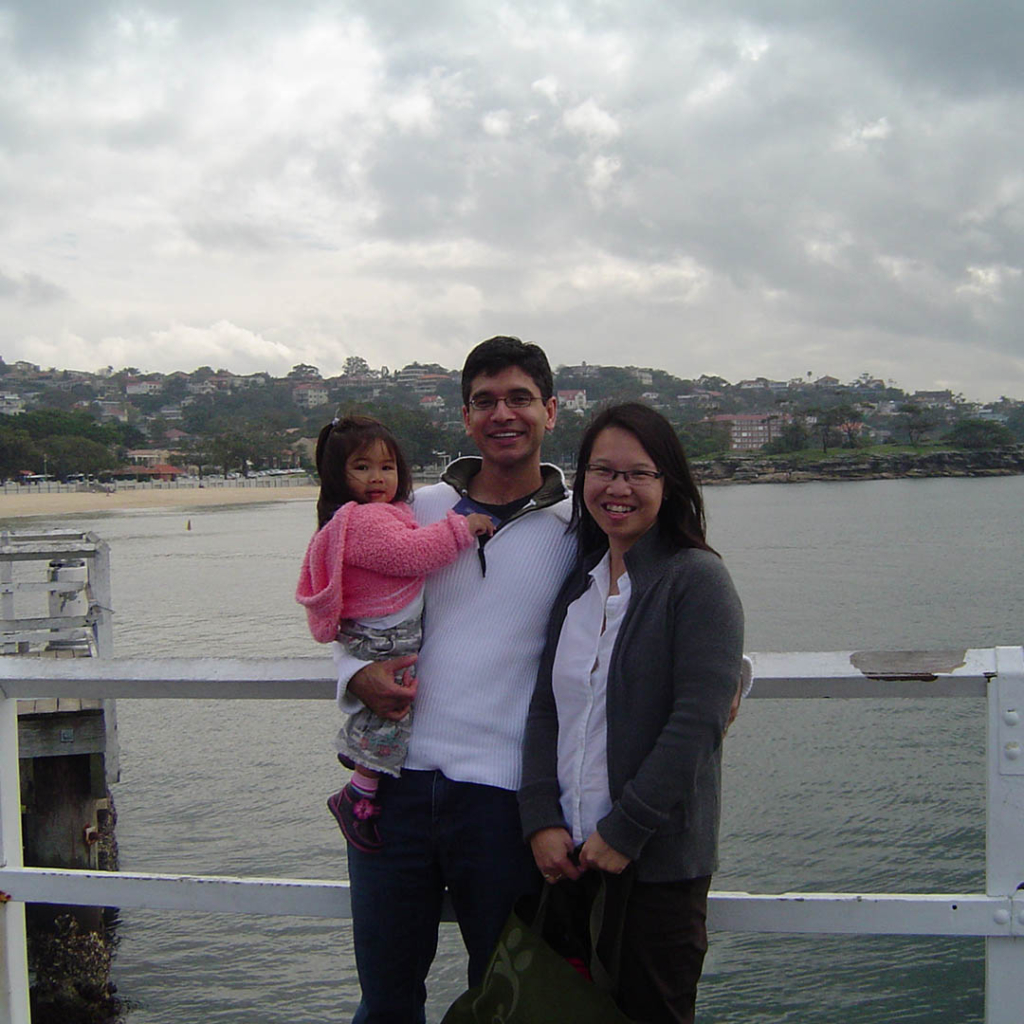
Dr. Singh with his family in Australia
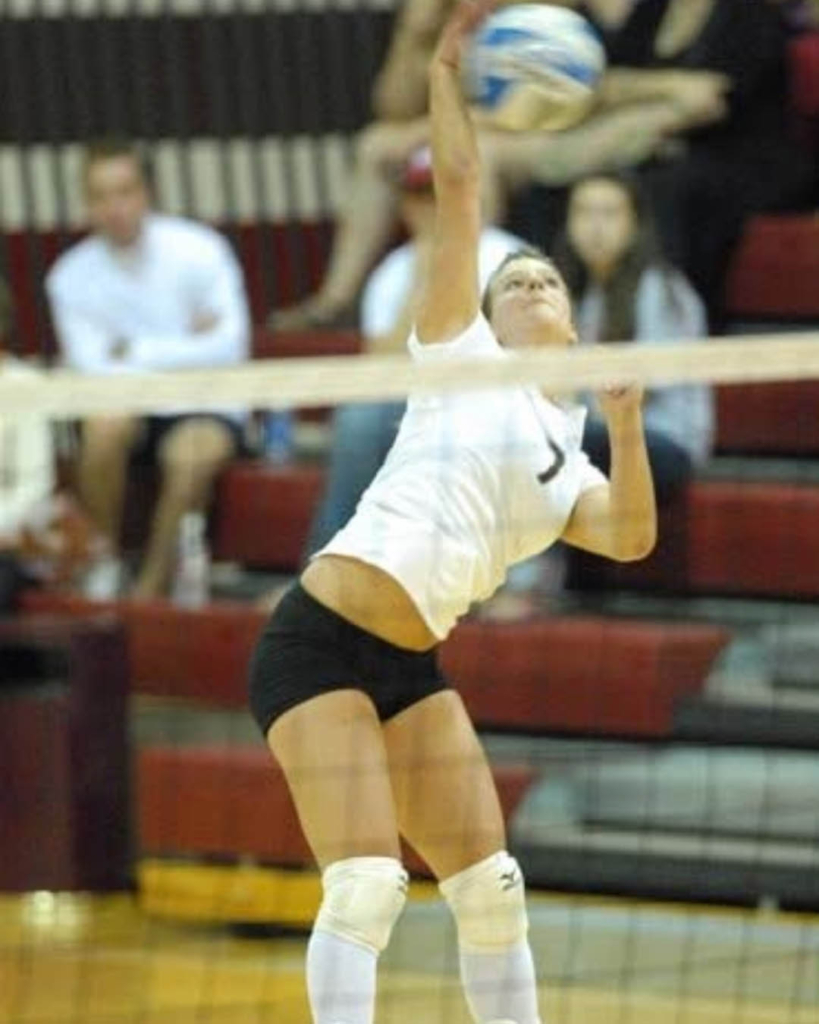
Jessica Lucky playing volleyball

From Kanata to Upstate New York to Washington, D.C., Jessica Lucky volleyed around getting her education before settling down back in Ottawa half a decade ago. Now a physician assistant at The Ottawa Hospital, Jessica is changing the game for neurosurgery patients by offering continuity of care, a familiar face, and a skillset that spans the clinic to the operating room (OR). Not just a helping hand for Dr. John Sinclair, neurosurgeon and Director of Neurosurgical Oncology at The Ottawa Hospital, Jessica brings much-needed medical and emotional support to the team.

Find out what pivotal moment convinced Jessica to pursue her role and why she loves working at our hospital.

Q: Can you tell us a bit about your early years?

A: I grew up in Ottawa, and I played a lot of sports, especially volleyball. I went to college catholique Franco ouest, and my favourite subjects were always the sciences, and I was very health- and sports-driven. I had a high school biology teacher who was so fantastic that it pushed me further on that track.

Q: What did you want to be when you grew up?

A: A marine biologist!

Q: How did you decide to pursue medicine and become a physician assistant?

A: I went to St. Lawrence University in Upstate New York, and that’s kind of where my journey starts. I got a scholarship to play varsity volleyball, and I majored in neuroscience. I did a thesis there on traumatic brain injury, which opened the next set of doors.

After my undergrad, I went to Washington, DC, and did research at the Uniformed Services University, and that’s where I was introduced to the role of a physician assistant (PA). I remember chatting with one of the PAs who worked there, and I made a bit of a joke, asking “what’s the difference between a PA and an MD?” and the physician looked over and said, “well, he gets to go home to his family tonight, and I’m stuck on the overnight shift.”

I realized I could still do medicine and patient care, but it spoke to me in having a certain balance in my life. I took the two-year PA program in Syracuse, New York, before landing back in Ottawa with my family seven years ago.

Q: What exactly is a physician assistant, or PA?

A: A PA is an allied health professional who helps a doctor with their work load — in my case, I assist Dr. John Sinclair. My job is to make their job easier. It involves bridging the gap where care is needed — sometimes in the clinic, sometimes in the OR. Dr. Sinclair’s vision is that this position allows continuity of care — a familiar face, not having to retell your story. These can be scary times for patients, and I can help reduce that fear.

Q: What do you love about neurosurgery?

A: What originally drew me was the challenge and excitement, how fast-paced it is. But now, what I love the most is the type of care we deliver. I find it incredibly fulfilling to work with oncology patients, getting to know them and their families. There are challenges, but it really feels like we make a big difference.

Q: What’s something that surprised you about neurosurgery?

A: The movies paint surgeons to be so rigid — excellent at what they do, but they can lack bedside manner. But after coming to The Ottawa Hospital, I realized that’s just not true. Dr. Sinclair especially has the best bedside manner of anybody I’ve ever met, he’s remarkable.

Q: You worked with Karol Phillips when she came in with a tumour. What made that her case unique?

A: Since first meeting her, Karol has always been very kind and resilient. She was found to have a relatively rare tumour, and it was also in a tricky location.

When she came in, there were two problems presented: one is that she had a tumour, and the second is that it was causing a condition called hydrocephalus, where pressure was building up in her brain.

What’s interesting is that Karol compensated for the effects of the tumour for a long time. For about a year, she’d experienced some double vision and balance issues, until eventually she said, “enough is enough.” By the time she came in, there was an urgency to proceed with surgery because of the hydrocephalus. Once we removed the tumour, we found it was a grade II central neurocytoma — a noncancerous tumour — of which I’ve only seen two cases since I started with Dr. Sinclair.

We removed the tumour with surgery, and she didn’t need any further treatment except monitoring to make sure it doesn’t come back.

Q: What would you say to someone who recently found out they need neurosurgery for a tumour or other condition?

A: I usually just tell them, “We’ll take really good care of you.” And that’s a promise we really keep. I think The Ottawa Hospital does a really good job of this. We have an excellent neurosurgery program. I feel positive when we can offer surgery, because it means we can offer them hope. Surgery is scary, but not being able to do anything is scarier.

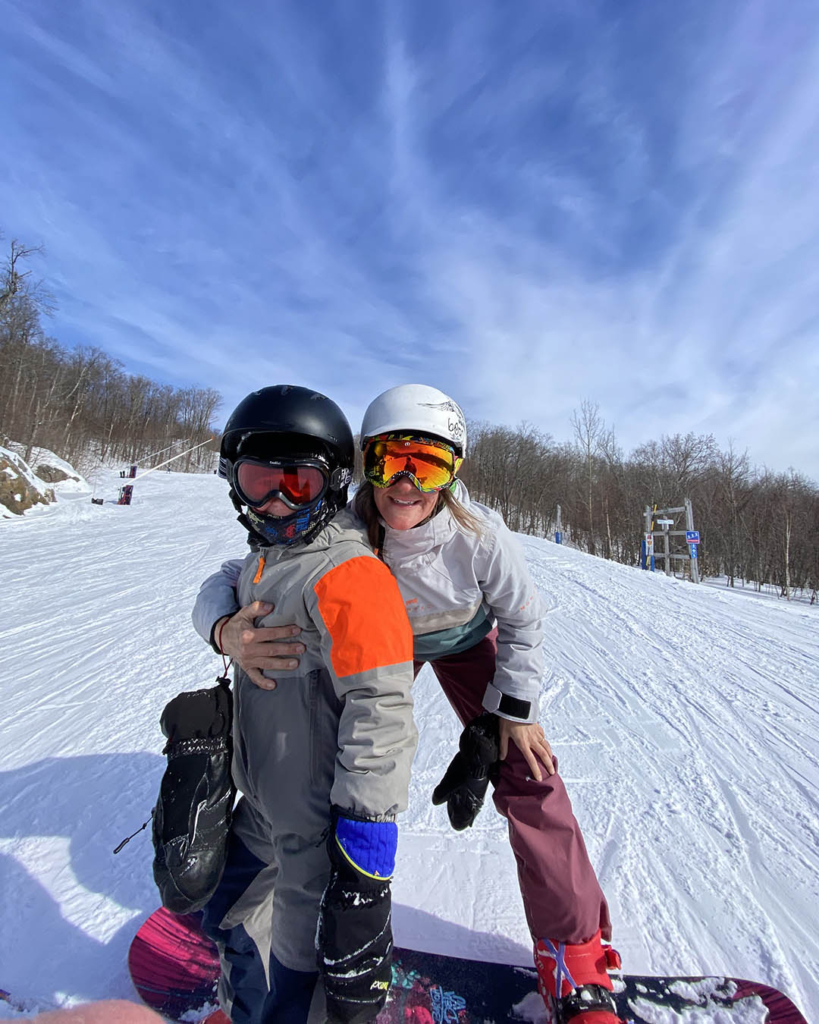
Jessica snowboarding with one of her children

Q: Why did you choose to work at The Ottawa Hospital?

A: I love that The Ottawa Hospital is big enough that we’re good at what we do, but it’s not overwhelming. There’s a good community feel, with knowledge, expertise, and care, and the ability to keep things very personal. I also love what I do because of who I work with. There’s just an incredible work-life balance here, and Dr. Sinclair is always making sure we don’t burn out and take time for personal days and to spend time with families. At The Ottawa Hospital, I found a team and boss that cares about medicine and the patients, but that also cares about me as a person.

Q: Where would we find you when you’re not at work?

A: My husband and I have two children. Our son is eight and our daughter is four. We are in a very fun stage of life, and we fill our days with activities and adventures. Life is busy and unpredictable at times … like today, I received a phone call from daycare letting me know our daughter gave herself a haircut. 

My husband and I met snowboarding at Jay Peak in Vermont, even though we’re both from Ottawa. The kids are starting to ski now, and so we’re always planning the next ski getaway.

Dr. Alan Chalil

There were moments Dr. Alan Chalil didn’t know if he would become a neurosurgeon, but those were few and far between. Usually, it seemed like he was born to be one, and in many ways, he was. The neurosurgeon, researcher, and Director of The Ottawa Hospital’s Surgical Epilepsy Program knew what he wanted to be from an early age, and he pursued that goal with dedication from day one. 

Today, Dr. Chalil is transforming the way we understand and treat epilepsy, in Ottawa and far beyond, through his practice-changing research and incredible clinical work.  

Find out who Dr. Chalil’s first patients were, what key lesson he learned in his undergrad, and why he’s excited about the future of epilepsy research and care. 

Q: What were your early years like?

A: I grew up in Syria and I was a nerdy kid. I mostly focused on studying, playing chess, painting, and playing guitar. I was never that excited to wake up and go to school, but in Syria, they ranked your grades and published them for everybody to see. There was some shaming there. I was always proud of being top of my class and never wanted my name to be two or three, so that was my motivation to go to school. 

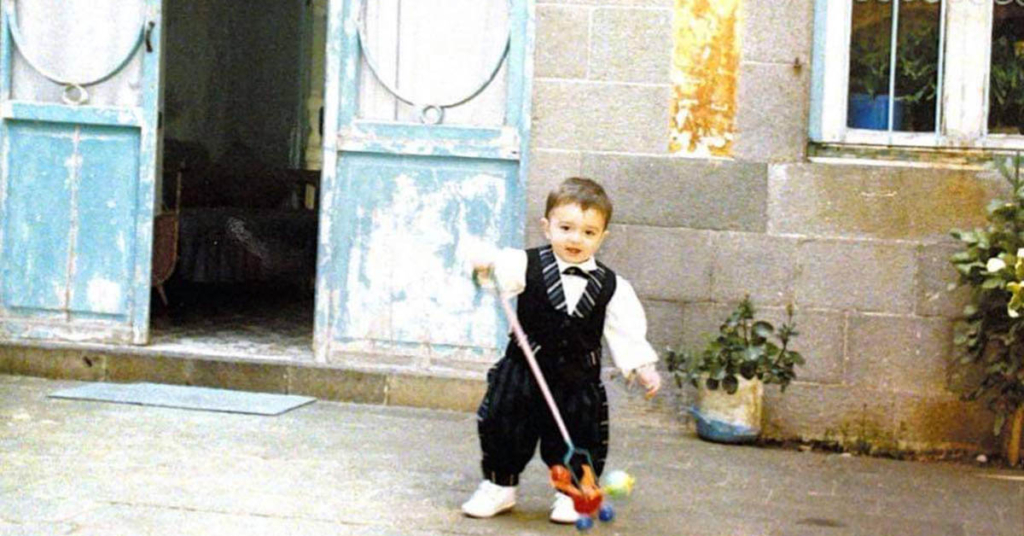
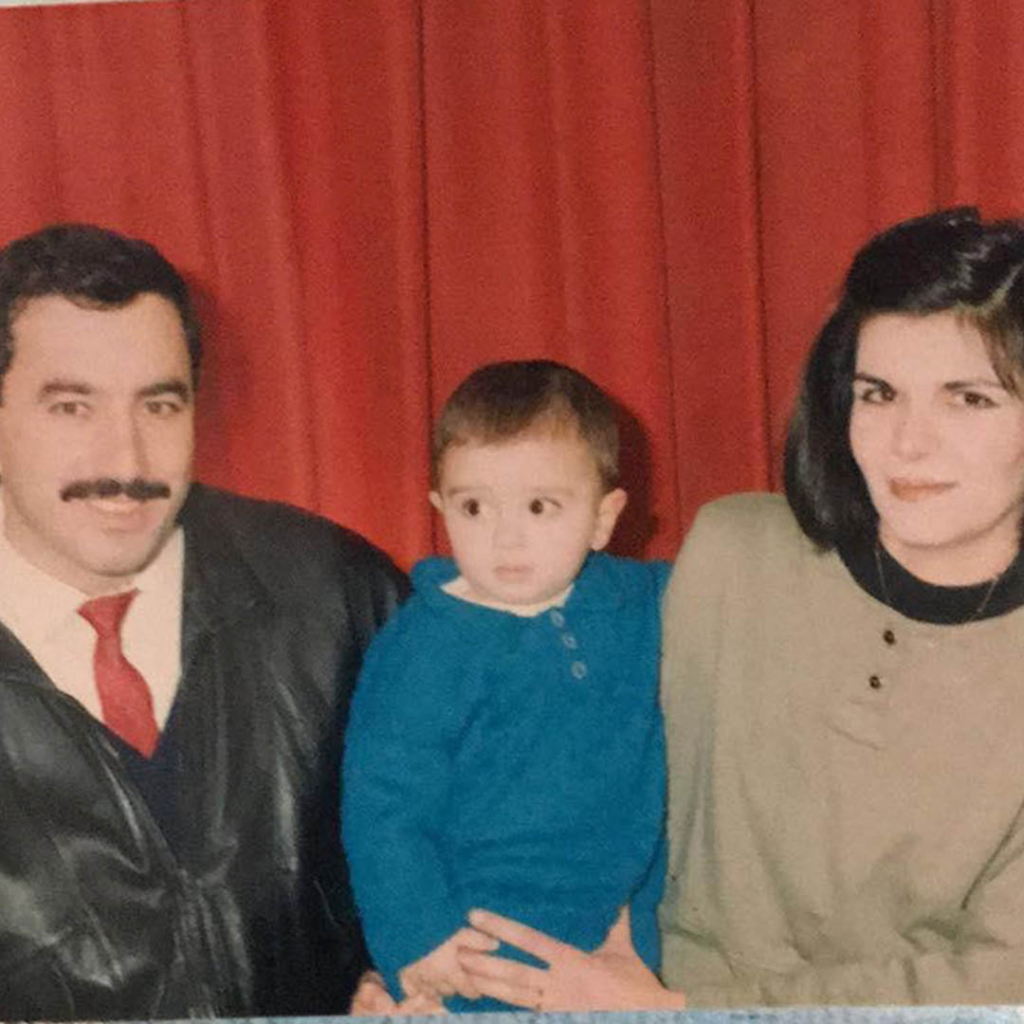
A young Dr. Chalil in Syria.
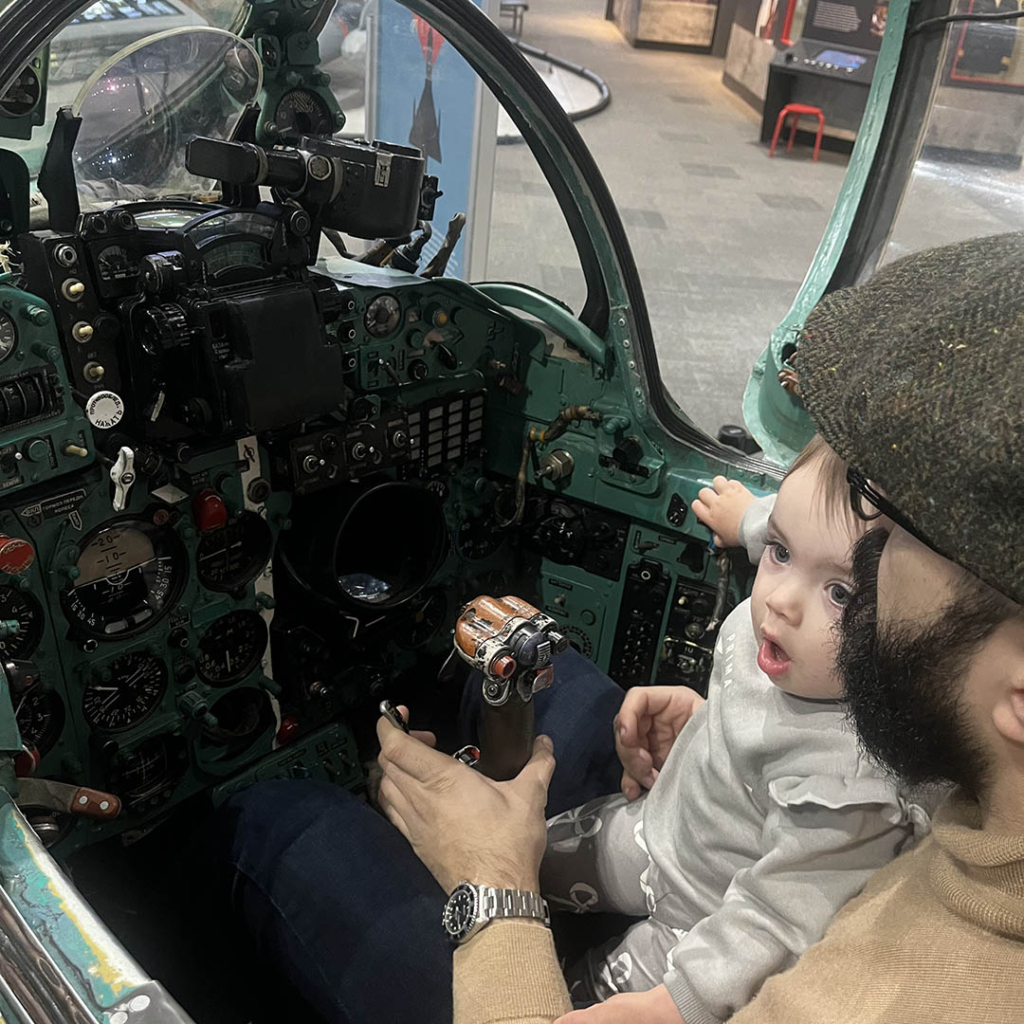
Dr. Chalil and his daughter learning about planes.
Dr. Chalil steering his daughter in the right direction.
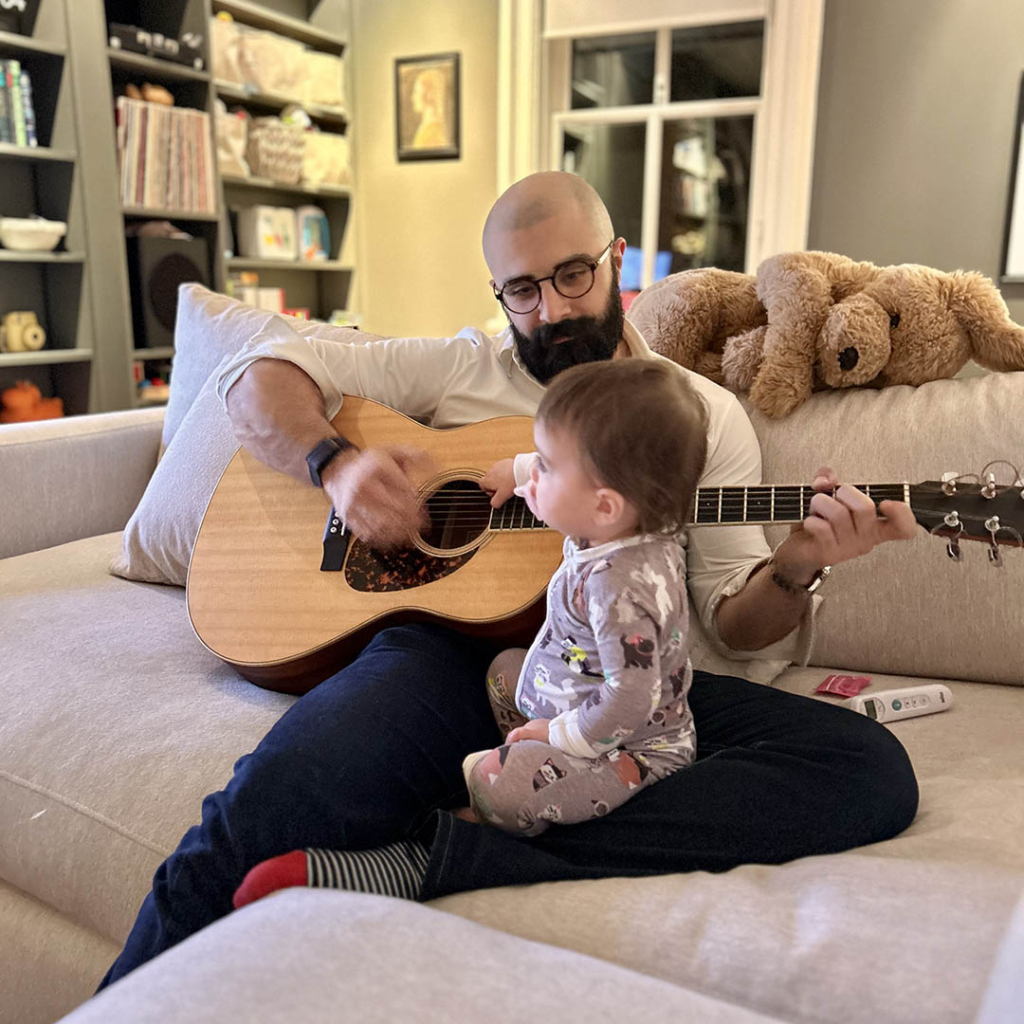
Dr. Chalil and his daughter duet.

Q: What was your favourite subject in school?

A: Physics! I was always a fan of physics and anything mechanical. I loved cars, watches, planes. Even the mechanism on a lighter would fascinate me. I would build little cars with electric engines, and it taught me how to use my hands. I always knew I wanted to do something with my hands.

Q: What did you want to be when you grew up?

A: I wanted to be a neurosurgeon. My dad was a neurosurgeon, and he always said it wasn’t a good idea and that I should do something different. But ever since I was a kid, I thought he had the coolest job. I used to do operations on my teddy bear’s head.

There were certain times I didn’t think it was achievable, though. I moved to Canada on my own in 2006, between Grade 11 and Grade 12. That’s when I realized how difficult it was to get into medical school.

That was probably one of the hardest years of my life. Jumping into a new society when you’re a teenager is a big transition. I’d never used English conversationally, so I got a job in a grocery store to learn and worked in grocery stores and in construction up until grad school.

Dr. Chalil and his parents

Q: What did your path to medical school look like?

A: I applied to the University of Waterloo for mechanical engineering and health sciences, and while I initially accepted for engineering, I changed my mind because everyone told me I couldn’t get the grades for medical school in that program. I still regret that.

I failed at getting into med school multiple times, but during my undergrad, I worked in a lab for physiology and lipid fat metabolism, and I wound up doing a master’s in that lab. When I was finishing that, I decided to apply for medical school at the University of Toronto one last time.

The funny thing is, after I applied, they sent me an offer for an interview. I was so excited that I ran out of the lab mid-experiment to tell my supervisor, and he hugged me. But then I got an email 10 minutes later saying the offer was an error. Two days later, I got yet another email, but I didn’t believe it, so I deleted the email. They had to email me again with “FOR REAL” in the subject line.

After medical school, I did my residency back in London and then a fellowship at Emory University in Atlanta, Georgia.

Q: What’s the most important lesson you learned in school?

A: There was one course in my undergrad that was really interesting: statistics. I was great at it, and I did all the extra assignments. I was that kid in the class — the annoying one, the teacher’s pet. When it was time for the exam, I went into it with 110% because of all the extra credit I’d done. I stayed up all night studying, then decided to get a little shut-eye at 6:00 a.m. When I woke up, it was 9:30 a.m. The exam was at 8:30 a.m. It was such a nightmare that I honestly didn’t know whether I was still asleep. I’d missed three-quarters of the exam, and I wound up with an 89% in the class.

It was the definition of the phrase “the opposite of good is perfect.” I learned a lot more than statistics that day.

Q: What drew you to epilepsy?

A: When I started medical school, epilepsy wasn’t even on my radar yet. During medical school, you can apply for multiple specialties, but I didn’t think I’d be as good a doctor anywhere else, so I only applied for neurosurgery. I matched in London, which is a very old program and has the biggest epilepsy program and the biggest functional neurosurgery program in Canada.

There, I met Dr. Andrew Parrent, who had one of the most profound impacts on my life. I was fascinated by his understanding of neurology and anatomy. In his clinic, I saw people like me — living normal lives, not looking sick — but who had epilepsy.

For many neuro cases, you’re trying to make the best of a bad situation — removing a tumour, resolving an injury. But with epilepsy, people typically have an intact brain, and you’re trying to find the balance of preserving neurological function while giving them freedom from seizures. It raises the stakes.

Q: What’s something people might find surprising about epilepsy?

A: What’s interesting is that most people think of epileptic seizures as like what they see on TV, as general convulsions. But epileptic seizures can manifest in a lot of different and weird ways. It can feel like a déjà vu sensation, like a face or arm twitch, or like an absence, where you stare into space. Alice in Wonderland type seizures make you feel like you’re small, but like the room is huge.

Epilepsy is not as simple as generalized convulsions. Most people don’t even know they’ve had seizures.

Q: What would you tell someone who has just been diagnosed with epilepsy?

A: I would tell them that no matter what, they’re still the same person they were before. I’d tell them, depending on their epilepsy, there’s a very good chance they’ll respond to medication — up to 70%. I would be supportive and sympathetic. It’s a very serious disease, and it’s important we catch it early.

Q: What is one of the groundbreaking procedures you’re currently using for epilepsy? 

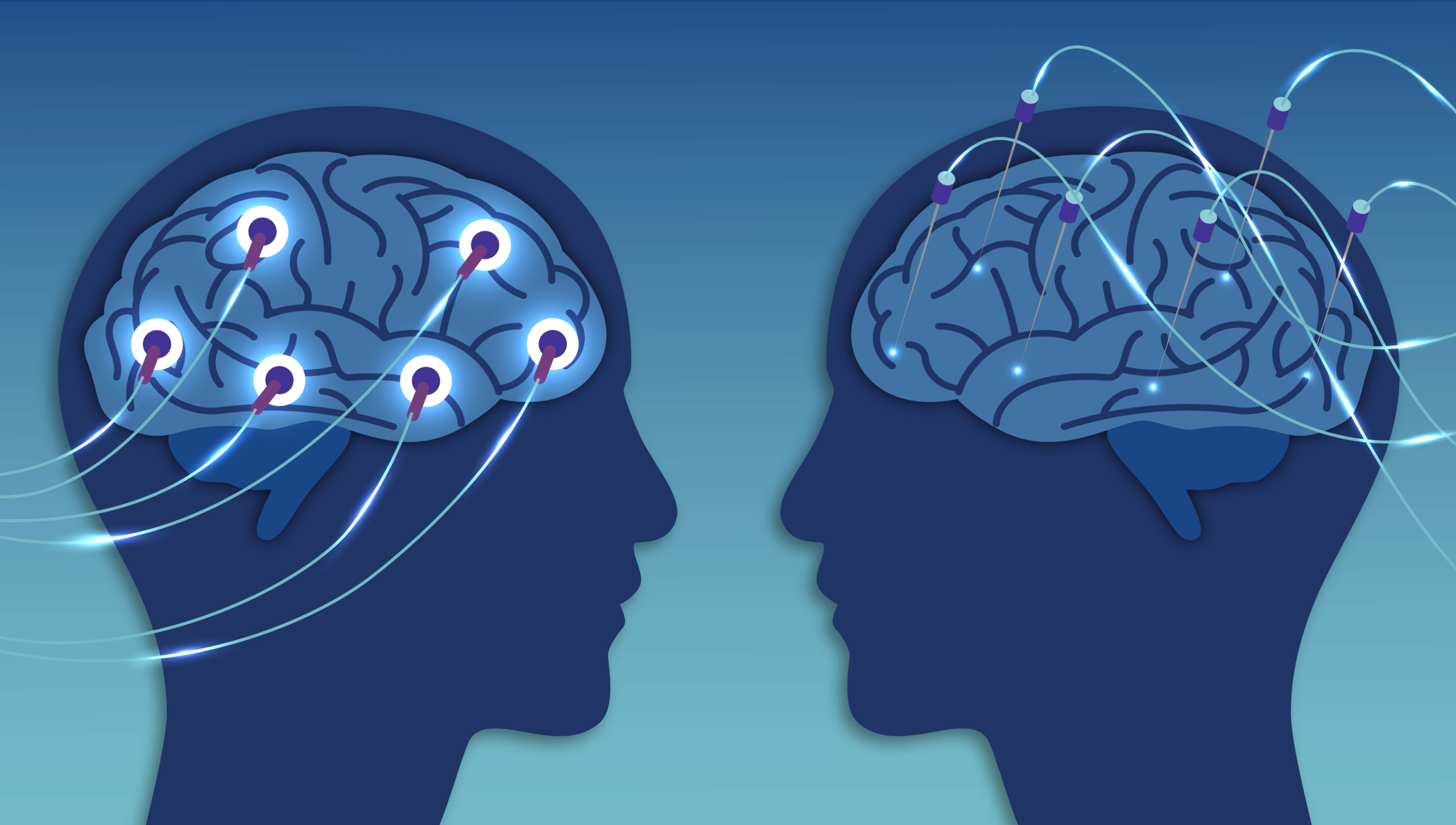
A: Something I specialize in is stereoelectroencephalography (stereo EEG), a minimally invasive procedure to pinpoint the source of seizures. Epilepsy is a network disease, and with this procedure, we try and identify which network in the brain is abnormal, then we implant tiny electrodes in the brain, down to a millimetre accuracy, to study where the seizures are coming from and how they’re spreading to other networks.

I have to answer two questions: where are the seizures coming from, and does the patient need that area or not? Every part of the brain is important, but there are some parts that could be causing you seizures, and there may not be a huge or negative impact if we disconnect that part of the brain. Stereo EEG helps us find out how to disconnect these areas with minimal impacts elsewhere.

Q: What is the future of epilepsy treatment?

A: The future of epilepsy is very tied to its past. In the last few years, we started experimenting with older treatments that we used decades ago, like radiofrequency ablation. But we’re using them differently today — we’re smarter, more targeted, and more methodical.

Dr. Tadeu Fantaneanu and Dr. Alan Chalil from our Epilepsy Program

Neurosurgery is so young that I can trace my lineage back to the father of neurosurgery a century ago, Dr. Harvey Cushing. He trained Dr. Wilder Penfield, a famous Montreal neurosurgeon, who trained someone else who trained someone else and so on until the neurosurgeon who trained me.

We still don’t know a lot. And you don’t know what you don’t know; that’s the fascinating part. We’re operating at the edge of our knowledge. We’ve made a huge amount of progress in the last 50 years. The pioneers of the past, like Dr. Penfield, paved the way for epilepsy surgeons today. I’m sure Dr. Penfield was also operating at the edge of his knowledge. We’re trying to do the same, but we have the advantage of retrospect.

I think in the future, there’s going to be a big role for brain-computer interfaces and brain implants. We are already implanting devices that communicate with the brain: they sense a seizure and try to stop it by producing small electric currents in the brain.

The future is bright for epilepsy because as long as there’s interest and funding to do that, we’ll continue pushing forward on a daily basis.

Q: What does community support mean for your patients?

A: Community support is huge because we’re trying to deliver minimally invasive options to patients to cure their epilepsy or reduce their symptoms. A lot of the equipment we’re using is cutting-edge and expensive. When we do a stereo EEG, it can cost $10,000 to $15,000. Right now, we’re collecting funds for a robot that can help us insert the electrodes for stereo EEG faster and more accurately.

Q: Why did you choose to work at The Ottawa Hospital?

A: The chance to start an epilepsy program drew me to Ottawa. There are multiple centres in the country, and two others in Ontario, but this was a chance to build a program from scratch and bring everything I learned in London and Atlanta to create something unique and different. I don’t have any doubts that we will become one of the busiest, if not the busiest, epilepsy programs in the country. To be a part of that story would be a huge honour.

Q: What motivates you to come into work every day?

A: What I truly look forward to is changing someone’s life for the better, even if it’s just a small improvement in pain or a reduction in their seizures. When you operate on an epilepsy patient who’s having seizures every day for years, and they wake up without them, it’s very satisfying. I tend to be very self-critical, too, and think I need to do better. I just want to improve on what I did the day before, and that’s a huge motivation. At a certain level, I am still competing to be at the top of that list from elementary school.

Q: Where would we find you when you’re not at work?

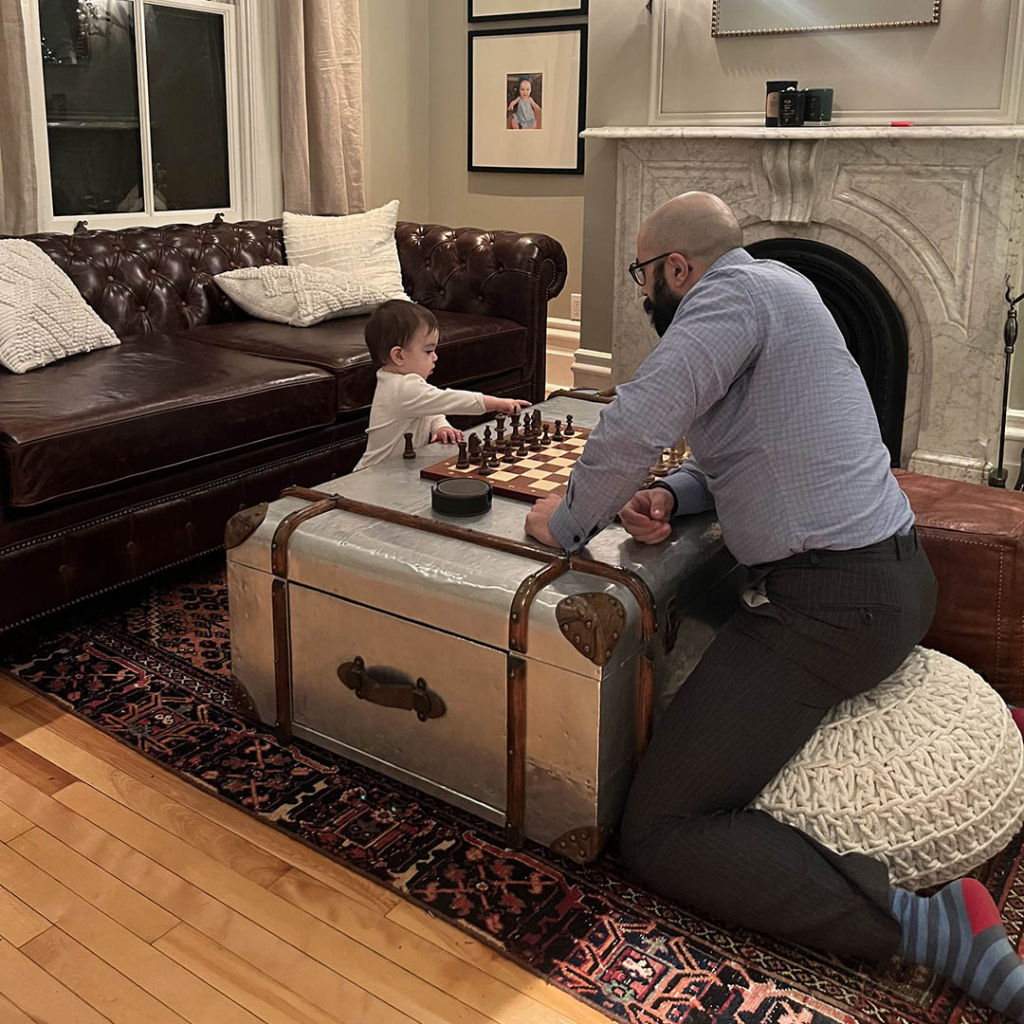
A: I go to the gym every morning first thing. Other than that, you’ll find me with my daughter trying to teach her chess. She can name all the pieces and knows where all the pawns go. She’s just 18 months, though, so she needs closed captions; she’ll say something to me, and I’ll look at my wife Courtney to translate.

Dr. Chalil and his wife travelling.
Dr. Chalil losing to his 18-month-old chess master.
Dr. Chalil on an adventure.
Dr. Adam Sachs is a neurosurgeon and researcher at The Ottawa Hospital

Dr. Adam Sachs is no stranger to discipline — whether practicing Wing Chun Kung Fu or performing neurosurgery.

As Director of Neuromodulation and Functional Neurosurgery and Scientist at The Ottawa Hospital, Dr. Sachs is changing the way we think about the brain through his research into brain-computer interfaces.

After studying math and physiology at McGill University for his undergraduate degree, Dr. Sachs saw the potential to bring them together through neuroscience and pursued a medical degree at McMaster University before landing a neurosurgery residency back at home in Ottawa.

Find out how Dr. Sachs thinks brains are like computers, what he loves about The Ottawa Hospital, and why you might find him fighting a co-worker on his break.

Q: Can you tell us a bit about your early years?

A: I was born and raised in Ottawa with three brothers, and we were all into skiing. We started quite young. As a teenager, I got into martial arts, Wing Chun Kung Fu specifically, and I’ve continued that my entire life. 

In school, I was OK, but it took me until university to really get serious about my studies. 

Dr. Sachs on a ski trip

Q: How did you decide to pursue medicine, specifically neuroscience?

A: My dad was a surgeon at The Ottawa Hospital, so I had medicine on my mind at a young age. But in high school, I thought I’d go into math or physics and be a teacher. Then, I realized I could use math as a doctor and try to model medical processes as mathematical problems. I thought the best organ to apply that to would be the brain because the brain is a biological computer and can be hacked into.

I did my master’s in neuroscience and math, modelling a certain aspect of human vision and comparing it to how computer programmers handle computer vision. I described how I could apply this to medicine in my application to medical school, and they obviously bought it!

Q: What exactly does your role as a neurosurgeon at The Ottawa Hospital entail?

A: I practice a type of neurosurgery called functional neurosurgery.

Other forms of surgery might look at structural issues. I’m also a spine surgeon, and if somebody has a broken back, that’s a structural problem. If somebody has a tumour in their brain, that’s a structural problem we can address by removing as much of the tumour as possible. An aneurysm is a structural abnormality in a vessel.

But chronic pain might not have a structural cause. At least, not one we’re able to detect. Parkinson’s is another functional problem. With functional neurosurgery, we deal with issues using electrical manipulation or stimulation.

Q: You divide your time between caring for patients and research, can you describe the research you’re currently working on?

A: We’re currently recruiting for a clinical trial testing a brain-computer interface for people who are living with severe physical disability. We’ll put an implant in their brain, plug it into an HDMI cable, and write algorithms to try and decode their thoughts. Not private, deep thoughts like, memories, but basic thoughts, like wanting to move in a certain direction. We’ll offer something like a coffee, a cell phone, and a cookie, and look to answer basic questions like, “Which does the person want?”

These “cognitive” implants will help us enhance the performance of a robotic arm being controlled by a “motor” implant. We’ve been publishing for decades looking at cognitive signals from the prefrontal cortex using these types of devices, and in this trial, there will be a small number of people we’ll interact with fairly intensively.

Dr. Sachs

Q: When Michelle Kupé came to The Ottawa Hospital for an extremely painful nerve condition, how did you and your team help her?

A: Michelle came to us with trigeminal neuralgia, a condition where it feels like you’re being shocked or stabbed in the face. The pain is severe and can be triggered by simply moving your face, brushing your teeth, taking a shower, or even just being exposed to wind. It’s a well-known condition in medicine, but the severity of Michelle’s case stood out.

Michelle had an artery pressing on her trigeminal nerve, and it had worn down the insulation around the nerve. In the majority of cases, this happens because of the way people are wired — where their nerves happen to fall.

Medication is the first line of treatment, and for many people, it’s sufficient. But surgery was necessary for Michelle, and is for many others. We found that in addition to the artery, there was also a large complex of veins around the nerve, which made it technically demanding. We surgically detached the artery and veins from the nerve, called microvascular decompression, and put a tiny, cigar-shaped piece of Teflon between the artery and the vein to protect the nerve.

She’s had a very durable result, and today, she’s living without nerve pain.

Q: What is the most exciting research happening in your field?

A: AI and deep-learning models are advancing almost every aspect of basic neuroscience. Talking about AI is like talking about statistics — it’s now ubiquitous. It can be used for patient data or to look at biological signals recorded from the body. I record signals from the brain, and we’ve started using deep learning algorithms and more advanced AI algorithms to help us make sense of those signals.

Q: The Ottawa Hospital is currently working towards the creation of a new, state-of-the-art health and research centre to replace our aging Civic Campus. What will this new hospital mean for your patients?

A: Neurosurgery is a highly technical field on the vanguard of new technologies. We use navigation, intraoperative imaging, biplanar fluoroscopy, robot assistance, intraoperative monitoring of neurophysiological function, tumour fluorescence seen on specialized microscopes, and other technologies that require certain infrastructure. They’re setting up the underlying architecture for all of this at the new campus, which will allow us to offer the latest in neurosurgery to our patients.

Q: Why do you choose to work at The Ottawa Hospital?

A: The reason I am excited to work here is because the values of the hospital align with my own: compassionate treatment and working together. I am also able to find the support to do the things I want to do clinically and in the lab. What I’ve found is that everyone working here wants to solve problems together.

Q: How does Kung Fu continue to play a role in your life?

A: I see a big connection between martial arts and neurosurgery. In fact, in my mind, there’s a continuum between Wing Chun and neurosurgery — they’re not completely distinguishable. They both involve body control and awareness, discipline, and they are both rooted in scientific principles and human physiology.

In Wing Chun, we consider ourselves brothers, and I actually have a Kung Fu brother, Doug, who’s a phlebotomist at the hospital. When we wanted to train, we’d reserve a conference room and use a break to practice together. Sometimes people walked in and his fist would be about to connect with my face. It can be a little difficult to explain!

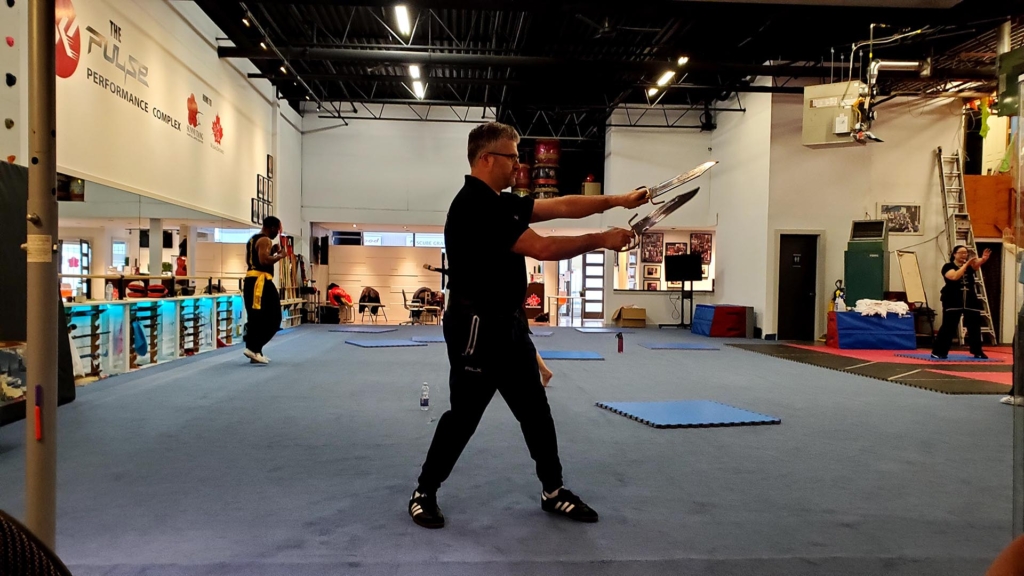
Dr. Sachs wields knives while he practices Kung Fu
Dr. Sachs at his kids bar and bat mitzvah
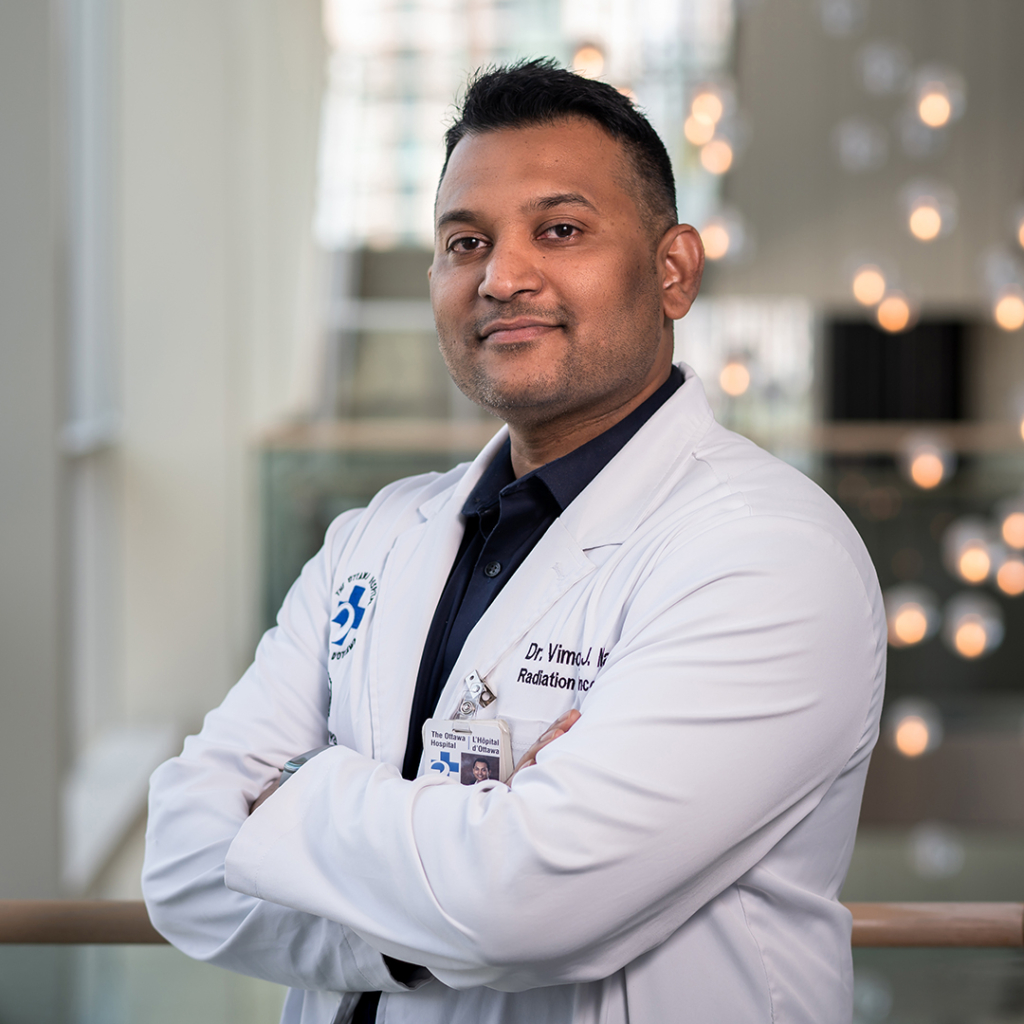
Dr. Vimoj Nair is a radiation oncologist at The Ottawa Hospital Cancer Centre.

Surgery without surgery — it sounds like a riddle, but it’s what Dr. Vimoj Nair does every day at The Ottawa Hospital. As a radiation oncologist, Dr. Nair specializes in radiosurgery, an extremely precise form of radiation that doesn’t involve a single incision. By using exciting new technology like the CyberKnife and conducting practice-changing research, Dr. Nair is reshaping how certain cancers are treated, and ultimately creating better outcomes for patients at The Ottawa Hospital and beyond. 

Keep reading to find out why Dr. Nair chose to pursue medicine and how the field has changed since he first started out. 

Q: Can you tell us a bit about your early years?  

A: I was born in Kerala, which is a beautiful state in southern India. My dad was an accountant with an American firm, so I started travelling as a baby, and I think all that travelling made me a bit of a global citizen. 

I did all my schooling in Kerala, though, and my favourite subjects were math and science. STEM subjects came easily to me — I’m a bit of a geek. At around 15, I got into computers and early coding, and I did a diploma in computer applications. Back in the early ’90s, having a computer was a luxury, and there was no high-speed internet yet, so there was very little information I could get, but it’s part of what made it so fun. Later, I think this early experience with computers brought me to an identity where the intersections of pure medicine and technology could change lives. 

Q: When did you decide to pursue medicine and become a doctor? 

A: Because of my broad interest in everything STEM, I didn’t know what direction to take. I took math and biology, and I got into software engineering and med school for university, but with everything I had seen growing up, I realized that the best way I could help my fellow human beings in any part of the world was by being a physician.  

“I think I went into radiation oncology because it’s the perfect combination of math, physics, and medicine — it mixes everything at the precise right dose.”

— Dr. Nair

Q: How did you wind up at The Ottawa Hospital? 

A: I always thought I’d wind up working in the US. After my residency in radiation oncology from Northern India, I completed my neuro-oncology fellowship from the Tata Memorial Hospital in Mumbai — the largest cancer centre in Asia. While I was there, I was selected for the American Brachytherapy Society Fellowship in Texas. The awards ceremony was in Toronto, after which I did my one-month fellowship in Texas. That stop in Canada made me realize I wanted to live here, that this is where I wanted my kids to grow up. I applied for immigration while finishing my residency in India, and I moved here to be the first CyberKnife fellow at The Ottawa Hospital.  

Q: How has the field of radiation oncology changed since you started?

A: The same way cell phones today are different from the cell phones of the 1990s, the field of radiation oncology has changed immensely. It’s a field where we’ve had the simultaneous adoption of both hardware and software, so we’ve had huge changes in technology that mean the precision with which we target cancer has gone from centimetres to millimetres and now less than a millimetre. The dosing and accuracy have improved incredibly. 

We’ve seen the introduction of radiosurgery, artificial intelligence, and virtual reality. The Ottawa Hospital has been a fast adopter of technology, and we were one of the first centres in the world to develop our own virtual reality–based system for improving the target delineation — or outlining the target — for treatment during cancer radiation therapy.  

Q: You worked on Erin Brown’s case; what made her situation so unique? 

A: With Erin, we had this brilliant young lady who had an aggressive, rare tumour that was mostly removed surgically before coming to me for radiation. We knew if we did something too focused, it was going to come back at the surgical site. But we also didn’t want to go too wide and cause unnecessary damage to the surrounding normal brain tissue. Picture it like a tree in a lawn: the surgeon plucked out the tree — or removed the tumour — and I had to go after the roots left in the lawn — the lawn being her brain. The art of the science was knowing what to spare. We wanted to protect her memory centres, so she could have a full and happy professional and personal life.  

Many years later she did have a recurrence in a different part of her brain, far away from the original site, suggesting cells migrated through the fluid in the brain. As the tumour came back after two rounds of surgeries in this entirely new site, we had to give more radiation to this area to prevent it from growing back.

Giving a second round of radiation to a young brain does create more technical challenges. But with the technology we have in the Radiation Medicine Program at The Ottawa Hospital, and the world-class team with decades of experience, we are able to successfully repeat irradiation to the brain with excellent results sparing her uninvolved memory centres.  

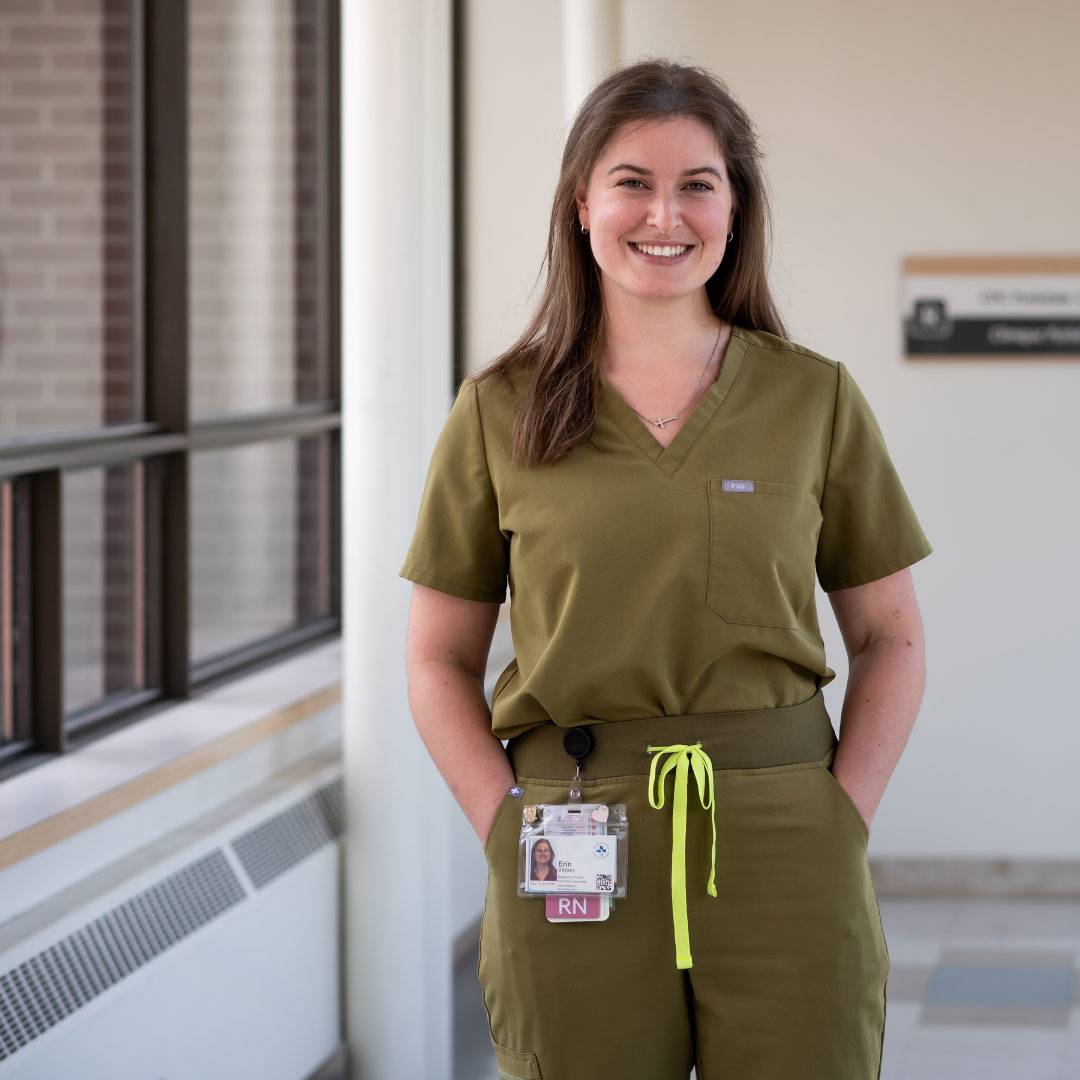
I’ve been so happy to see her finish her education, and she became a nurse right here at The Ottawa Hospital. 

Q: In your role as a clinician investigator at the Ottawa Hospital Research Institute, what are you currently working on? 

A: I’m a broad-spectrum radiation oncologist, so I dabble in many things. Right now, I’m working on a world-first clinical trial for studying the role of the gut microbiome on brain cancer with my collaborator Dr. Terry Ng. Another innovative study was with collaborators Dr. Jean-Philippe Thivierge from the University of Ottawa School of Psychology and Dr. Janos Szanto in radiation physics (now retired) to see what radiation does to brain cells and how we can use it as a painless scalpel in non-cancerous cases. We are also studying various medications that could potentially reduce side effects and improve effectiveness of radiation. All this research is funded by donors or by winning competitive grants.  

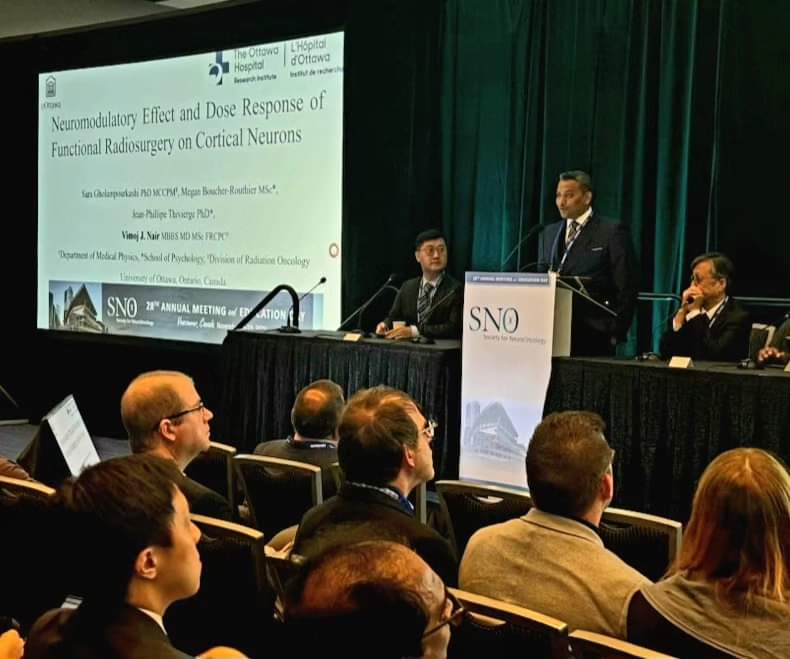
Dr. Nair presenting at the society of neuro oncology 2023 conference

Q: How important is support from the community in advancing your research at The Ottawa Hospital? 

A: We are blessed to live in a city where people believe in giving back to the community. When I started as a fellow here, in 2011, I was able to support fundraising for research work using the Cyberknife. Fast forward to today, and the novel research I’m doing on the gut microbiome, or radiation’s effect on the brain, was only possible due to the generosity of our local donors. 

Q: Where would we find you when you’re not at work? 

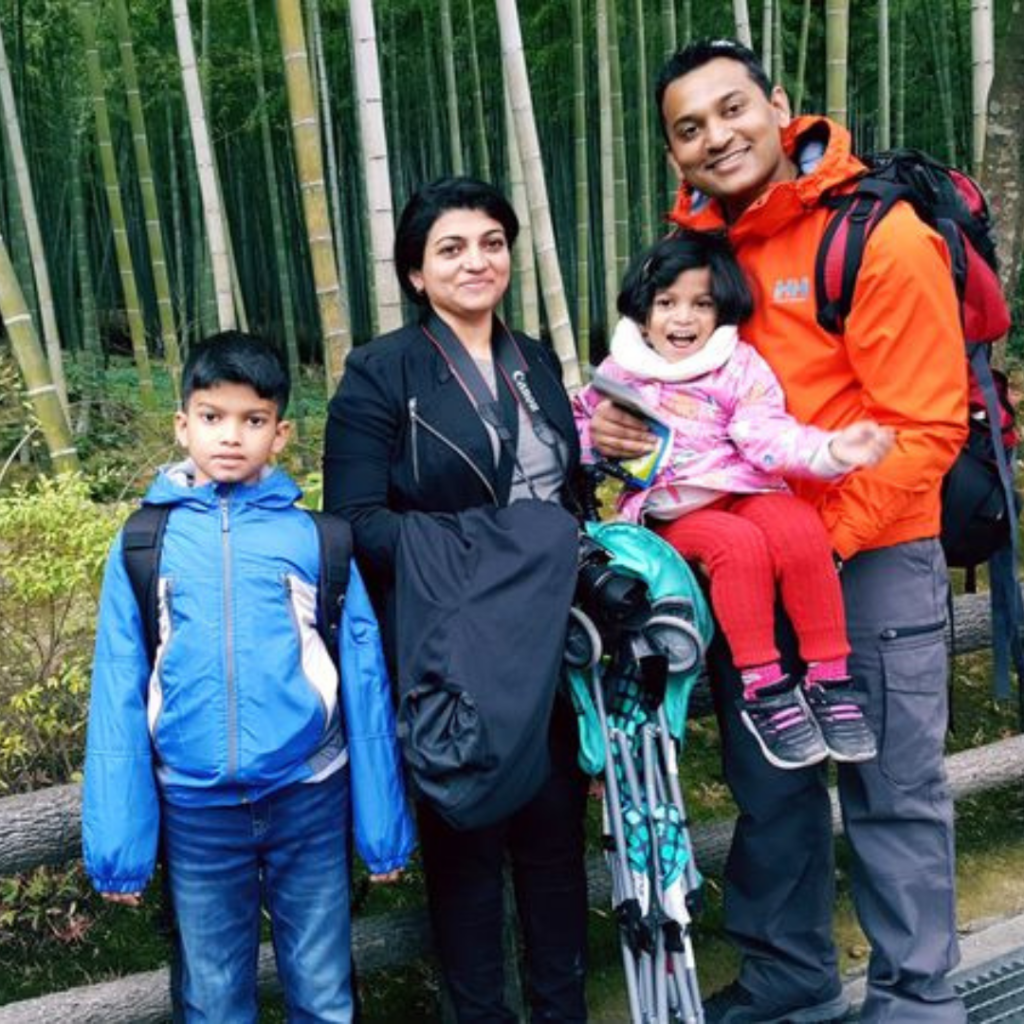
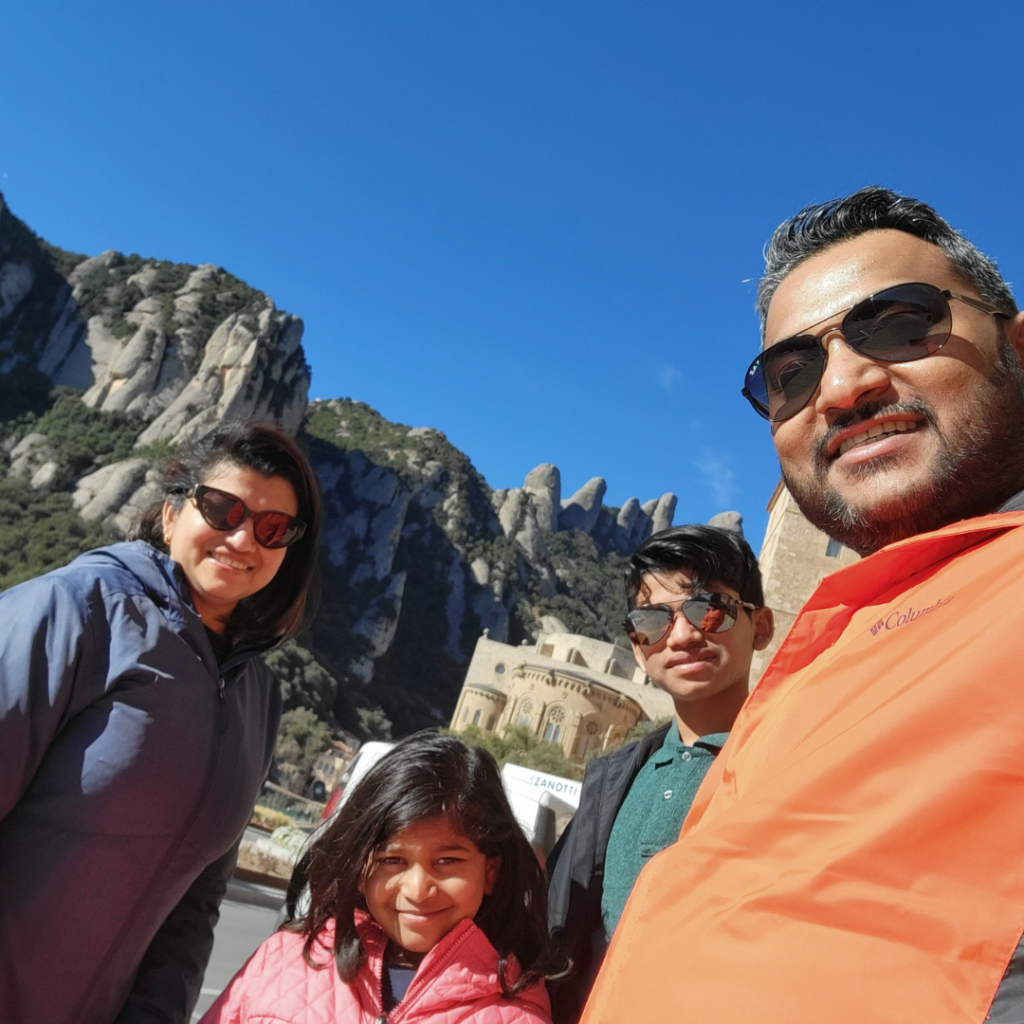
A: Spending time with my wife and my two kids. I enjoy learning everything and anything out of my comfort zone. Technology, economics, space tech, med tech, the list goes on. As a family, we all spend a lot of time reading and chatting about these topics. At the same time, we make it a family policy to unplug ourselves from technology and travel to see more of this beautiful blue planet of ours. We love travel, whether it’s within in Canada or roaming all parts of the globe — from hiking the Montserrat mountain in Barcelona to the gruelling climb up the Grouse Mountain in Vancouver, or what people call mother nature’s Stairmaster. 

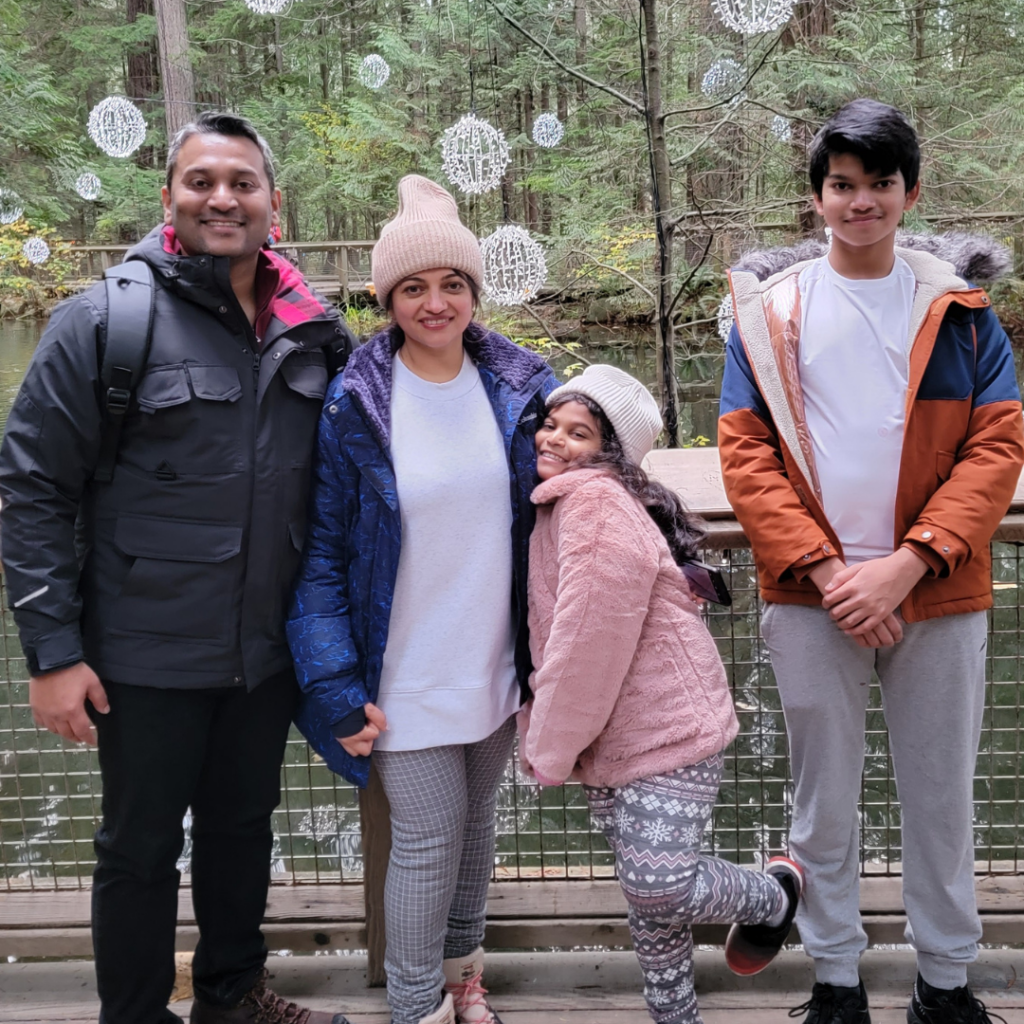
Dr. Nair and his family in Vancouver
Dr. Nair and his family hiking in Japan
Dr. Nair and his family in Montserrat

It was only a glimpse she caught, standing on the side of the Trans-Canada Highway as it curved along Lake Superior, but since then, Terry Fox has remained a source of inspiration for Dr. Rebecca Auer. His vision and determination helped motivate her to where she is today — an award-winning cancer clinician-scientist.

Dr. Auer combines revolutionary cancer research with hands-on patient care every day in her role as Executive Vice-President of Research and Innovation at The Ottawa Hospital and CEO and Scientific Director at The Ottawa Hospital Research Institute. 

As a surgeon, Dr. Auer sees with clarity that, while surgery may be the best chance for a cure in most cancers, patients are particularly vulnerable to both infections and cancer recurrence in its aftermath, in large part because the immune system is suppressed in the postoperative period. Dr. Auer’s research program is focused on understanding the mechanisms behind this effect and reversing them with innovative therapies.

In recognition of her practice-changing research, Dr. Auer has been named the 2023 recipient of the Chrétien Researcher of the Year Award. 

Keep reading to learn about her childhood stint at CHEO and an alarming late night in the lab.  

Q: What were your early years like? 

A: Ottawa has always been my home; I grew up here, went to high school here, and went away for my undergrad in Toronto and medical school in Kingston before coming back to Ottawa for my surgical residency. 

I wasn’t fantastically good at school when I was younger. I had a learning disability related to writing, called dysgraphia, but I was good at math. My mother, a psychologist by training, would say, “If you’re good at math, do math, and you’ll figure out the writing stuff later.” 

We were super early adopters of computers, so I had an Apple computer by the time I was six, which was unusual. Being able to work on the computer took away a lot of the challenges of dysgraphia. 

Q: What made you decide to pursue a career in medicine? 

A: In high school, I really enjoyed sciences, especially biology. When I was 15, I was hospitalized for about three months with a bone infection in my knee called osteomyelitis. Even though I was stuck in my room on bed rest, I loved CHEO. I met a lot of interesting kids my age, most of whom had way more significant problems than me, but that didn’t seem to matter. We played practical jokes on the nurses, snuck ice cream from the kitchen, and laughed together after lights out. At a time when the only thing that mattered in high school was being cool, I found a place where people cared only about the things in life that really matter. I wanted to work in that kind of environment. 

Q: How did you wind up in oncology, specifically? 

A: When I first got into to medical school, I wanted to be a neurologist because I was fascinated with the way the brain works … but in practice, it wasn’t what I thought. Then, I considered obstetrics and gynecology because I enjoyed the operating theatre. In the end, I did a rotation in general surgery and it was love at first sight. It wasn’t rational, but I knew. Maybe it was the adrenaline of looking after sick patients, the diversity of different types of diseases, or the incredible feeling you get when you save someone’s life by fixing a hole in the intestine or stopping life-threatening bleeding. Every day would start at 5:30 a.m. and end after 6:00 p.m., and I never once looked at my watch. It was just a really intense experience. 

When I got into surgical residency, I had no idea what I wanted to specialize in. I thought maybe trauma or even rural surgery, but I found I was more interested in molecular biology than the other things I was supposed to be studying, like hernia repair techniques or the technical approach to the inflamed gallbladder. I decided to do a masters of science (MSc) in molecular genetics during my residency, but no one really wants to take a surgical resident for a one-year MSc if they’ve never done any work in the lab. One day, my mentor, Dr. Hartley Stern, who was the head of the Ottawa Regional Cancer Centre, overheard me complaining and called senior cancer researcher, Dr. John Bell. Suddenly I was doing a year in his renowned translational cancer therapeutics lab.  

I had so little experience working in a lab that I got teased a lot. Once I threw away a DNA gel because I thought I had cut the piece of DNA in half. I remember Dr. Bell joking that even a surgeon as skilled as me could not cut a piece of DNA with a scalpel! DNA is so small you have to use enzymes to cut it. I also used to keep the hours of a surgical resident in the lab, and one late night, I recorded a massive radiation reading with the Geiger counter. I was sure there had been a major radioactive spill. I called the postdoctoral fellow, who asked if I was pointing it at the fridge with the big radioactivity symbol on it … where we kept all our radioactive substances. When I admitted that was true, he said “Yes, yes, the fridge is full of radioactivity. Now please put the Geiger counter down and go home to bed!” 

“I realized what a privilege it is to look after cancer patients.”

— Dr. Rebecca Auer

Being in the lab was an amazing experience, and in the end, I decided to go into cancer surgery so I could have a research program in cancer biology. It was only later, during my senior residency and fellowship at the Memorial Sloan-Kettering Cancer Centre (MSKCC) in New York, that I realized what a privilege it is to look after cancer patients. It is their courage, resilience, and ability to show gratitude, even during some of the most trying times, that I find so remarkable. 

Q: What is the focus of your research? 

A: My research program is focused on understanding how surgery impacts the immune system. We know the immune system is highly effective at destroying cancer cells, but in the aftermath of surgery, the immune cells are almost completely dysfunctional for at least a week and up to a month or more. The research from our lab suggests that this postoperative immune suppression is responsible for cancer recurrence after surgery.  

As a surgeon, I take cancers out, but I don’t change the biology of disease. If the cancer is completely contained and there are no cancer cells floating in the blood stream or implanted in distant organs, the patient can be cured. Unfortunately, for many patients that is not the case, and months to years later, those cancer cells — the ones that were present at the time of surgery floating around undetected — grow into new tumours. The Auer Lab has hypothesized that if you reverse or prevent this immune suppression and have a strong and functional immune system after surgery, it could clear these left-over cancer cells and prevent the patient from getting a recurrence. We have demonstrated this is true in mouse models, and now we need to show it can be achieved in cancer surgery patients. We do wet-lab research to understand why the immune cells are dysfunctional and then experiment with different “perioperative” immunotherapies, given around the time of surgery, to see which work the best and then try them in clinical trials.  

Q: You are being recognized for an important clinical trial published in one of the world’s top medical journals. Can you tell us a little bit about this trial?  

A: PERIOP-01 was my very first clinical trial, and like most things in my life, I reached a bit too high. It was a national, multicentre randomized controlled trial, designed to change practice. Since then, we have done PERIOP-02 to PERIOP-06, all of which have been smaller scale. 

The trial was looking at whether perioperative administration of a blood-thinning drug, called tinzaparin, could help the immune system kill cancer cells following surgery for colon cancer and reduce cancer recurrence. Interestingly, the trial was negative, in that cancer recurrence was not lower in the group that got the tinzaparin, but what it did show was that you don’t need to give patients extended treatment with blood thinner after surgery to prevent blood clots. The trial was practice-changing, even if it wasn’t what we were hoping to see. 

On a personal note, translating a preclinical finding, discovered in my lab, into a human clinical trial conducted in collaboration with my surgical colleagues across Canada, was a major accomplishment. 

Q: How do you feel about receiving this award? 

A: This award is a huge honour, especially when I look at the people who have won the award in the past. It’s hard to believe I’m in that category. I’m also very proud of getting this study published and finished — it was the monkey on my back for many years. Like all research, it was a team effort and I cannot thank the co-investigators, collaborators, and research staff enough for all their support. This is especially true of my co-principal investigator and senior author, Dr. Marc Carrier. He is an incredibly accomplished researcher and former recipient of the Chrétien Award. Working with Marc and his team was a highlight of this project. 

Q: Why is research so important for the healthcare being delivered today at The Ottawa Hospital? 

“Never has it been more obvious than in cancer today, but research is care.”

— Dr. Rebecca Auer

A: In many cases, research is the best option for care, or the only option. The line between research and clinical care is increasingly difficult to draw clearly in the sand, and it is time to recognize we are creating more problems by trying to keep them separated.

Dr. Rebecca Auer speaks with a patient at The Ottawa Hospital Cancer Centre.

When it comes to rapidly advancing technologies, like molecular testing or personalized therapies, they are moving so quickly from bench to clinical studies that if we don’t embrace research as part of care, we are doing our patients a disservice. Every patient deserves an opportunity to participate in research, and as an academic hospital, it is our responsibility to provide those opportunities to patients. Research can fuel hope for patients by providing a new or alternative treatment for them or the potential to help others in a similar situation in the future. 

Q: What’s something people might not know about you? 

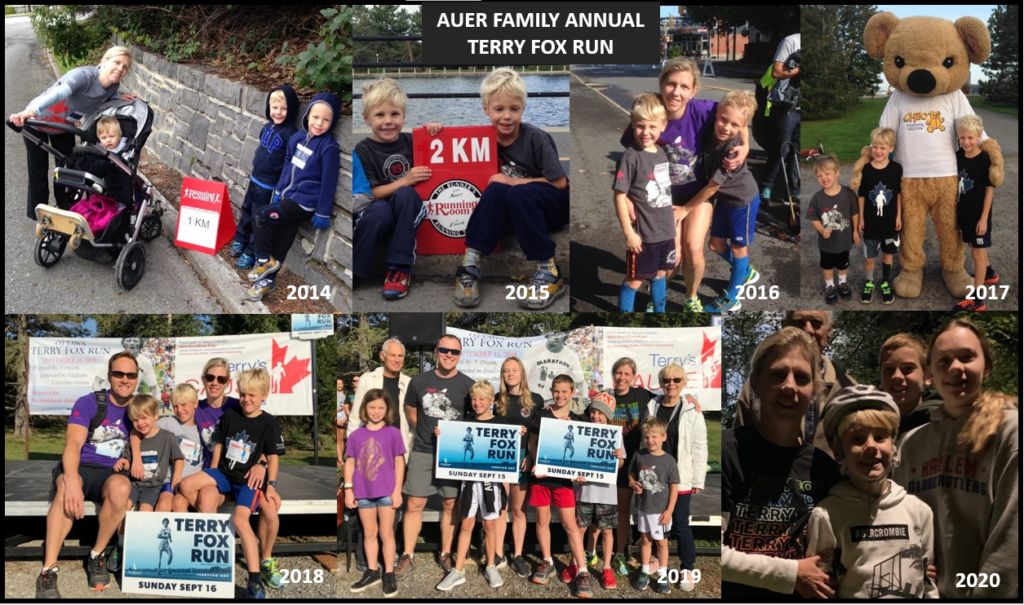
A: I think most people know Terry Fox is a hero to me. There are so many facets to his story. He had a bold and audacious vision to run across Canada on one leg to raise money for cancer research — a vision which he articulated the night before his amputation for cancer. He was steadfast in his determination, having run halfway across Canada in training miles before he ever dipped his toe in the Atlantic Ocean. He inspired others to join his cause and be part of something bigger than themselves. As the mother of three boys, I want them to know Terry’s story and understand the value of working hard for something you believe in. Every September, for the past decade, we have participated in the Terry Fox Run as a family, raising over $120,000 for cancer research.  

Auer Family Terry Fox Run 2014 – 2020

My one claim to fame is that I got to meet Bruce Springsteen at a fundraiser when I was the Chief Fellow at MSKCC in New York City. At the time, his long-time friend and E Street Band member, Danny Federici, was being treated for metastatic melanoma. I told Bruce about Terry Fox, his legacy in Canada, and how much research had changed cancer care since his death in 1981. Although Bruce probably didn’t remember any of it, I like to think that maybe Terry’s story gave him hope. 

Auer Family Terry Fox Run 2021
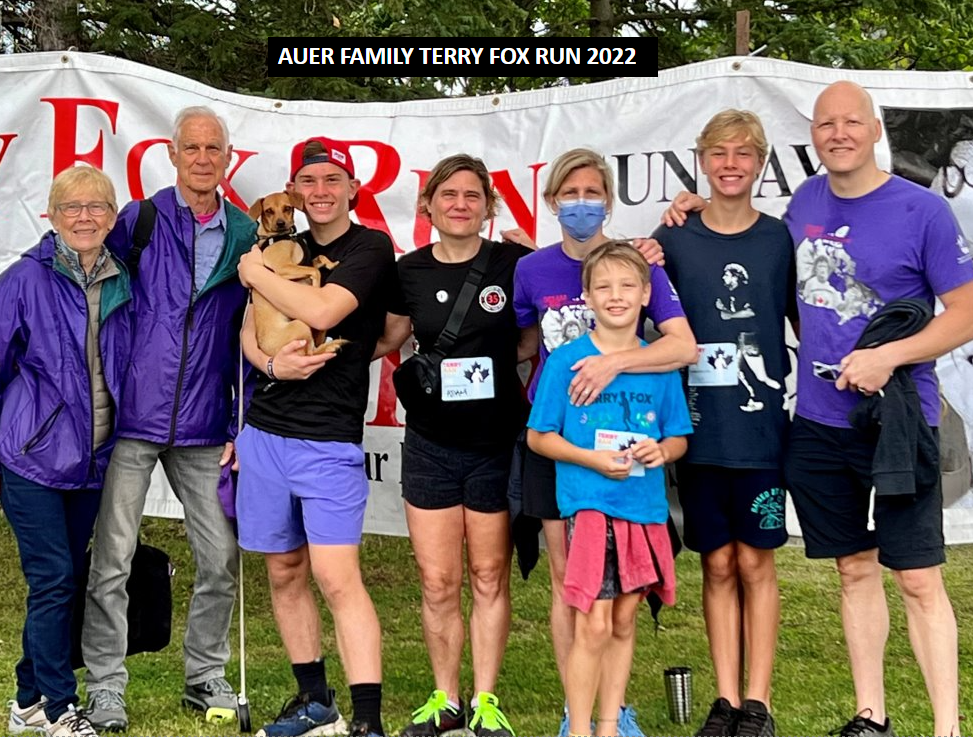
Auer Family Terry Fox Run 2022
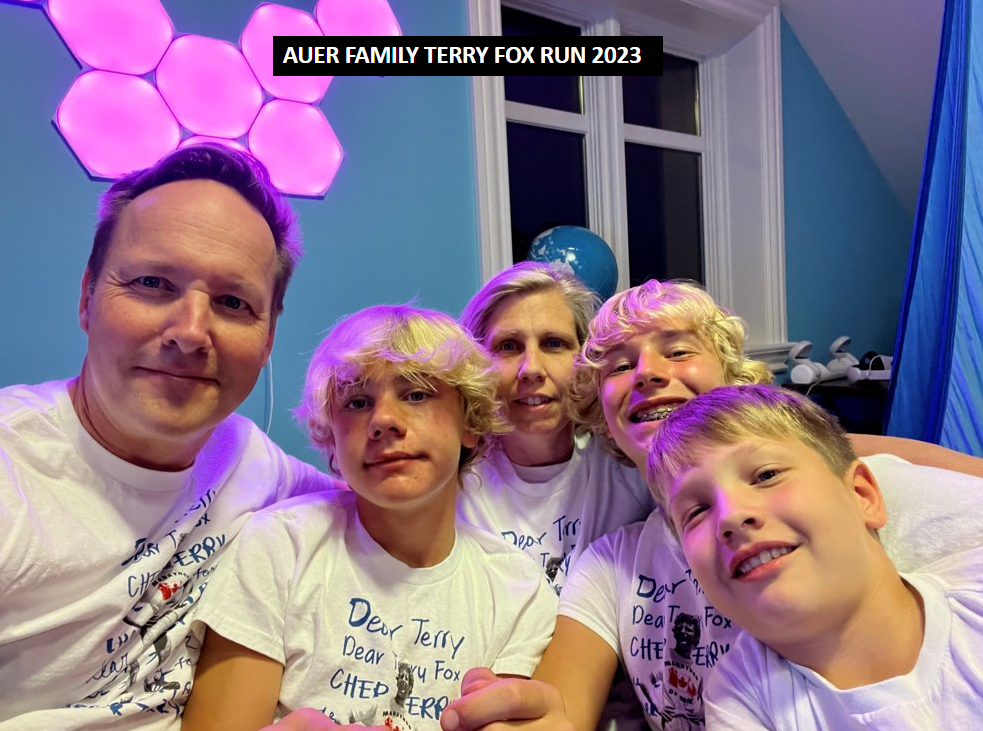
Auer Family Terry Fox Run 2023

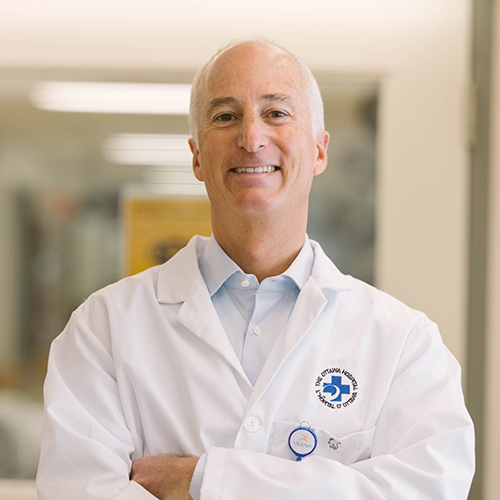
Dr. Shawn Aaron never intended to go into research. Early in his career, the respirologist — a doctor who specializes in lung disease — saw his future as working directly with patients. But after falling in love with research at The Ottawa Hospital, Dr. Aaron became a senior scientist working at the intersection of research and clinical care.

Dr. Aaron is also Principal Investigator and Director of The Canadian Respiratory Research Network, whose goal is to bring together researchers across disciplines to work together to improve the understanding of the origins and progression of chronic airway diseases in Canada.

In recognition of his practice-changing research, he has been named the 2023 recipient of the Dr. J. David Grimes Career Achievement Award.

Read on to learn why Dr. Aaron chooses to work at The Ottawa Hospital, what he’s excited about for the future, and why research isn’t like tennis.

Q: Can you tell us a little bit about your path into medicine?

A: I was born in Montreal, back in the dark ages of 1964. I’m the last of the Baby Boomers. I grew up in Montreal, went to public school there, went to McGill for my undergraduate degree, and then continued into medical school at McGill. When I finished, I went to Toronto and trained to be an internist and a respirologist — that is a doctor who specializes in lung disease. After that, I trained in intensive care medicine. When I finished, I just couldn’t get enough of training. So, I came to Ottawa, and I did a master of science in epidemiology. I finished my masters in 1999, and by then, at the age of ’99 minus ’64, I thought I was finished.

And then I started my research career.
Q: What drew you to research?

A: I thought I was simply going to be a physician in the community doing respiratory medicine. But when I was looking for a job in that field, my wife — who is an obstetrician gynecologist and grew up here — wanted to come to Ottawa. I reached out to The Ottawa Hospital, and they said, “We’d love to have you, but we want you to train to be a researcher.” I said, “Great. Sure. I’ll try it.” In the end, I fell in love with the idea of doing research for a living.

“Research is not a single-person sport.”

Dr. Shawn Aaron

Research is not a single-person sport. It’s not tennis; research is football or baseball. I work with statisticians, research program managers, and research coordinators. There’s a whole team that supports research. And without that team, there’s no way that I could ever have been successful. I am perhaps the coach of a football team.

Q: You specialize in cystic fibrosis and COPD, two chronic lung diseases. Can you tell us a little bit more about them?

A: They’re both debilitating lung diseases. Cystic fibrosis is genetic, so it affects young people, in their infancy. In the old days, when I first started practicing, our patients were routinely dying in their 20s and 30s. It was devastating. You can imagine how awful that is for the patients and their families and even for their healthcare providers. The good news is that in the last five or six years, we have dramatically improved treatments for cystic fibrosis. Our patients are living almost normal lives. And we expect their life expectancy, when we have more data, will probably be at least in the 60s or 70s. It’s a fantastic achievement, and clinically, it’s brought me incredible joy in my career.
COPD (chronic obstructive pulmonary disease), is the exact opposite of cystic fibrosis. It’s a disease of older people. It’s debilitating because it causes people to become very short of breath. Many of them require oxygen, you might see them on the street, walking with oxygen tubing in their nose. The most frustrating part of COPD is that we haven’t yet developed those magic cures like we have for cystic fibrosis. Unfortunately, in my 30 years of practice, my patients with COPD are still quite disabled, and still, unfortunately, dying of their disease.

Q: How is the research you do changing the care patients receive?

A: I turned my master’s thesis into a New England Journal of Medicine article, so you could say I peaked early. It was a study where we took patients presenting with acute crises in their COPD. We showed that when we gave them prednisone, a strong anti-inflammatory steroid drug, they had fewer relapses. We proved prednisone works for this. The proof wasn’t there before, and now prednisone is the standard of care.

Later on, I worked on a study on using a combination of inhalers to treat COPD. We wanted to see if we could prevent crises by treating them with a combination of inhalers. We hypothesized — I mean, it’s not rocket science — that if you combine inhalers, you might get better bang for your buck. We did the first clinical trial to use triple therapy for COPD, and we showed it was better for many outcomes.

In terms of research I’m doing now, we have a large study that will finish in January 2024. The research is trying to address that fact that we as health care professionals are currently doing a poor job of picking up and treating COPD. The basic problem with COPD care in 2023 is that by the time the patient comes to see a doctor complaining of shortness of breath, it’s too late. They’ve already lost their lungs; their lungs have been dissolved out. Unfortunately, this means doctors are closing the barn door after the horses have bolted; we’re trying to treat a disease that already has progressed dramatically. What I’m addressing with my research is whether we can catch the disease at a much earlier stage than with conventional diagnosis — and get treatment started much earlier to prevent disease progression, disability, and death.

In this study, we’ve recruited over 3,000 randomly selected Canadians who are complaining of respiratory symptoms but have never been diagnosed with any lung disease. We’re using spirometry, a simple test in which the patients blow into a tube and we measure how quickly they blow. The test is safe and simple and takes 15 minutes. Based on those tests, we’re diagnosing people with either COPD or asthma that has never been diagnosed before. In other words, these are people who are walking around in the community who are short of breath or coughing or wheezing and don’t know they have a disease. Once we find the disease, we’re doing a clinical trial where we randomize them into intensive treatment or usual care. Our goal is to see if by finding the disease early, and treating it early with intensive treatment and education, we can improve patient outcomes. I think it’s very exciting because we’re actually doing something that’s never been done before to try and catch and treat people early to see if we can improve the course of their disease.

Q: Why have you chosen to work at The Ottawa Hospital for so long?

A: The Ottawa Hospital gave me my big break. I was sort of like a rookie being drafted, and they thought I was promising enough to take me on, so I guess I’ve always felt an affinity to them. There are other reasons, though. The Ottawa Hospital and the University of Ottawa really nurture young researchers, and they allow us to develop at our own pace. They provide us with the support we need.

“The Ottawa Hospital is an amazing place to do research and clinical work, not just in Canada, but within the world.”

Dr. Shawn Aaron
The Ottawa Hospital is an amazing place to do research and clinical work, not just in Canada, but within the world. We have an incredible group of researchers who are world class. It’s things like cell-based therapeutics, clinical epidemiology, muscle physiology, molecular biology, and neuroscience. If you come here, you’re going to obtain great mentorship, you’re going to have great opportunities for collaboration, and you’re going to come into a very supportive environment, which is going to nurture you towards success.
Q: What excites you about the future of respirology?

A: I think the exciting part about the future is figuring out new modalities to treat COPD and asthma better. As I said earlier, one of those is going to be identifying patients early and trying to treat them early. I think in the next five years, we’re going to look at the clinical benefits of identifying patients early, but also the economic benefits. We’re also going to try and figure out how to use machine learning techniques, or AI, to do this early identification even better. Right now, we’re doing it with good old-fashioned questionnaires and phone interviews to figure out who might be sick and who should come in for testing.

Q: How does it feel to receive the Dr. J. David Grimes Career Achievement Award recognizing the work you’ve done?

A: I felt a few ways. One was incredibly humbled; I really didn’t feel I was deserving of the award because I know amazing scientists at The Ottawa Hospital, and I know many of them are much smarter and better than I am. I was surprised I actually got the award. But I was very pleased, obviously. My second reaction was to have a little bit of chagrin, because the Grimes award is for career achievement, so it’s usually given to people who are either on the verge of retiring, or who have retired. This was a sign that I am getting near the end of my career, but I think I still have five years left before I fade into oblivion. I am determined to make the best of what I have left and to continue to do important research.

Q: Where would we find you when you’re not in the lab or clinic?

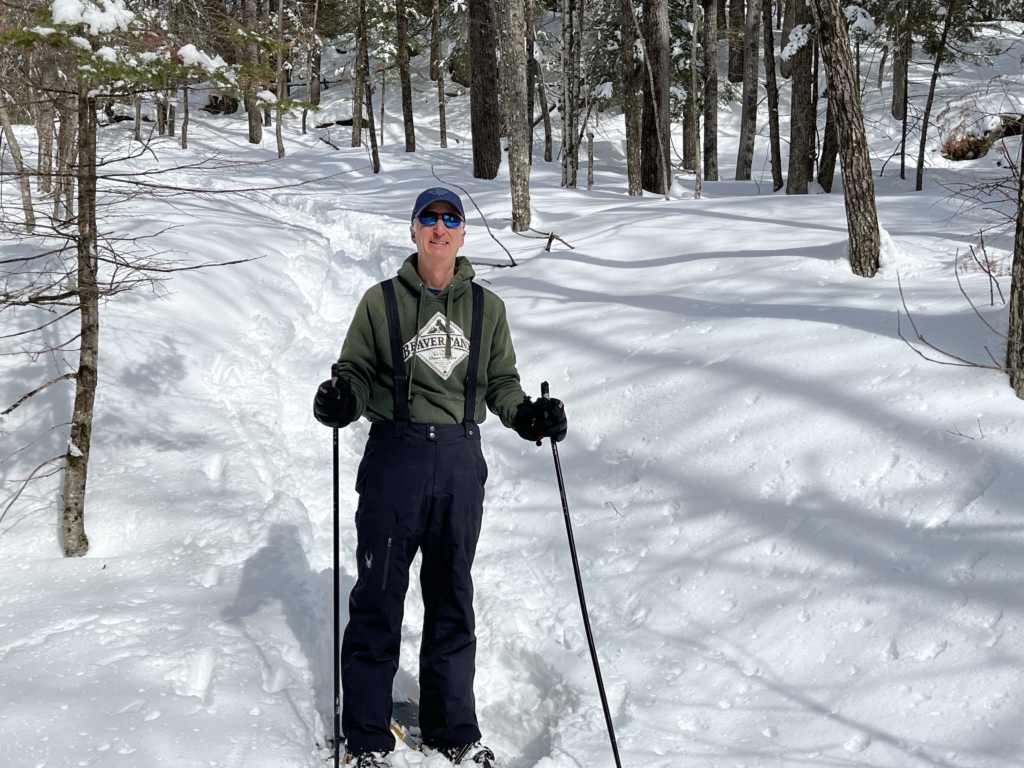
A: That’s easy. I’m going to be at the cottage, in the Outaouais, kayaking in the summer, snowshoeing in the winter. It’s my happy place. I’m hoping I can retire with my health and enjoy those activities.

Dr. Shawn Aaron snowshoeing

From Naval Officer to award-winning researcher

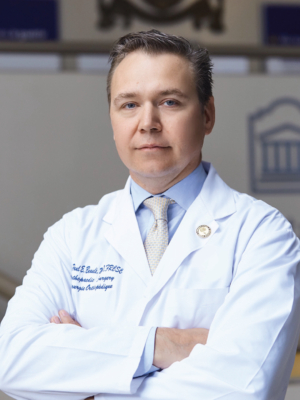
Meet orthopaedic surgeon Dr. Paul E. Beaulé

Dr. Paul E. Beaulé considers it a privilege to practice his art. The former Chief of Orthopaedic Surgery at The Ottawa Hospital (2015-2021) has spent his career refining and redefining this art — specializing in the preservation and replacement of hips while maximizing patient outcomes. When he’s not working directly with patients, Dr. Beaulé works as a scientist at The Ottawa Hospital, Director of Research and Innovation for the University of Ottawa Orthopedic Program, and more recently, Chief of Staff at Hawkesbury and District General Hospital.

With more than 350 papers and 200 lectures and workshops in several areas in orthopaedic research to his name, Dr. Beaulé is among the top 2% of most-cited authors in the world in the field of orthopaedics.

Despite so much on to go, Dr. Beaulé found some time to tell us more about what drives his research and why a better healthcare provider experience means better patient care.

Q: Can you tell us a little about your early years?

A: I’m originally from Quebec City. My first language is French, but my father sent us to English school, which was somewhat unusual in the ’70s, at the height of separatist movement. I always felt outside the box, outside the norm of practice, like I was challenging the status quo. That, I think, was a key foundation to some of my character or personality today.

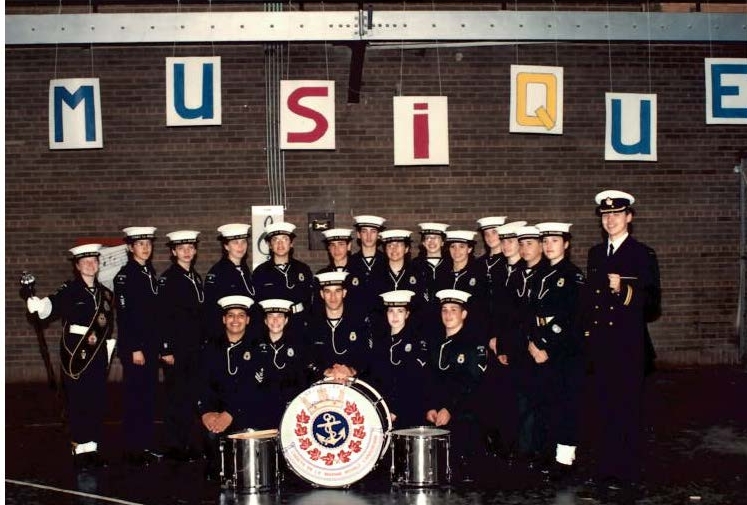
I was also heavily involved in Sea Cadets. You define your area of interest within a larger organization — I was in band — and move up the ranks. It showed me how to follow a leader but also how to become a leader, and how to integrate with people of all walks of life. I was a musical instructor, and when you take a group of young teenagers and not only make them play an instrument but also play together and perform together, to me, it showed the importance of teamwork, collaboration, and education, which translated through my career as a researcher, educator, and leader.

Dr. Beaulé (far right) as an officer with the Sea Cadets

Q: What drew you to medicine, and specifically to orthopaedics and research?

A: I became interested in medicine early on. I like it in terms of the stability, knowing your role. We had a close family friend who was an orthopaedic surgeon, and I heard what he’d dealt with. The technical aspect of orthopaedics and giving people back their quality of life is what drew me to the speciality.

I wasn’t really aware of the level of research intensity you could achieve in orthopaedics until I went to Los Angeles in 1998 for two years of fellowship — one at University of California, Los Angeles (UCLA) and one at University of Southern California (USC). There, I discovered that musculoskeletal research, which is the core of orthopaedics, has this reach in so many other fields of science. There’s a capacity to innovate on so many fronts, in terms of how you do your procedures, what implants we use, how we influence patient recovery, and just the sheer magnitude of the disease burden — musculoskeletal diseases are the number one chronic disability in the world!

Q: Can you tell us about some of the research you do at The Ottawa Hospital?

A: My research on hip disease and biomechanics was influenced by my years in Los Angeles, where I worked with two internationally renowned hip surgeons who opened my eyes to how hip surgeries can be quite versatile. We brought together a group of multidisciplinary investigators — in medical imaging, human biomechanics, and health sciences engineering — and built out a research program to look at patient outcomes, and for which we received several Canadian Institutes of Health Research (CIHR) grants. In 2018, we were awarded the Kappa Delta Award, which is the top research award in the world for musculoskeletal research, from the American Academy of Orthopaedic Surgeons. We were only the second group in Canada to get it. The program has continuously evolved since.

We collect patient-reported outcome measures (PROMs) in one of the largest platforms in Canada covering all orthopaedic specialities. We’re pushing the envelope when it comes to assessing how we do things better.

Another aspect of my research is the quality of care in orthopaedics and overall, within medicine. It’s mainly looking at how to improve the efficiency of our processes. I’m also looking at the healthcare provider experience, which has been at the forefront of HR challenges since COVID. It’s important because when you have a good healthcare provider experience, that impacts patient experience, and we’ll have a sustainable workforce.

Getting her life back

Plagued by discomfort and pain her entire life, Amy Volume was diagnosed with juvenile rheumatoid arthritis at the age of 18 months. She turned to our orthopaedic surgical team in hopes of finding a solution to her suffering.

Q: What will the new campus development mean for your patients?

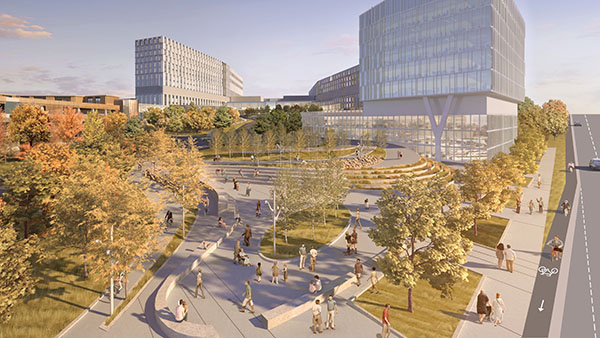
A: I think the new campus will help the patients in regard to their experience, but also the healthcare worker experience. We’ll have an improved workflow through the new layout and through the integration of technology and access to the most advanced imaging. This will all ease the patient’s journey, both mentally and physically.

A rendering of the new campus development.

Q: Where would we find you when you’re not at work?

A: The key is variety, and I squeeze in leisure where I can. The days are jampacked with work; some days I’m in Hawkesbury in the morning, have various administrative meetings, head back to Ottawa where I’ll provide clinical care, and then I’ll often have another couple meetings in the evening. If I finish early, I’ll go play a round of golf. Golf is something I enjoy tremendously. When I have work at the Civic or General campus, I’ll bike to work. The bike paths are a beautiful aspect of Ottawa: if I go to the General, I bike along the Rideau, if I go to the Civic, I bike along the canal. I’m so privileged to be able to do that.

A childhood revelation and rethinking what you know about bones

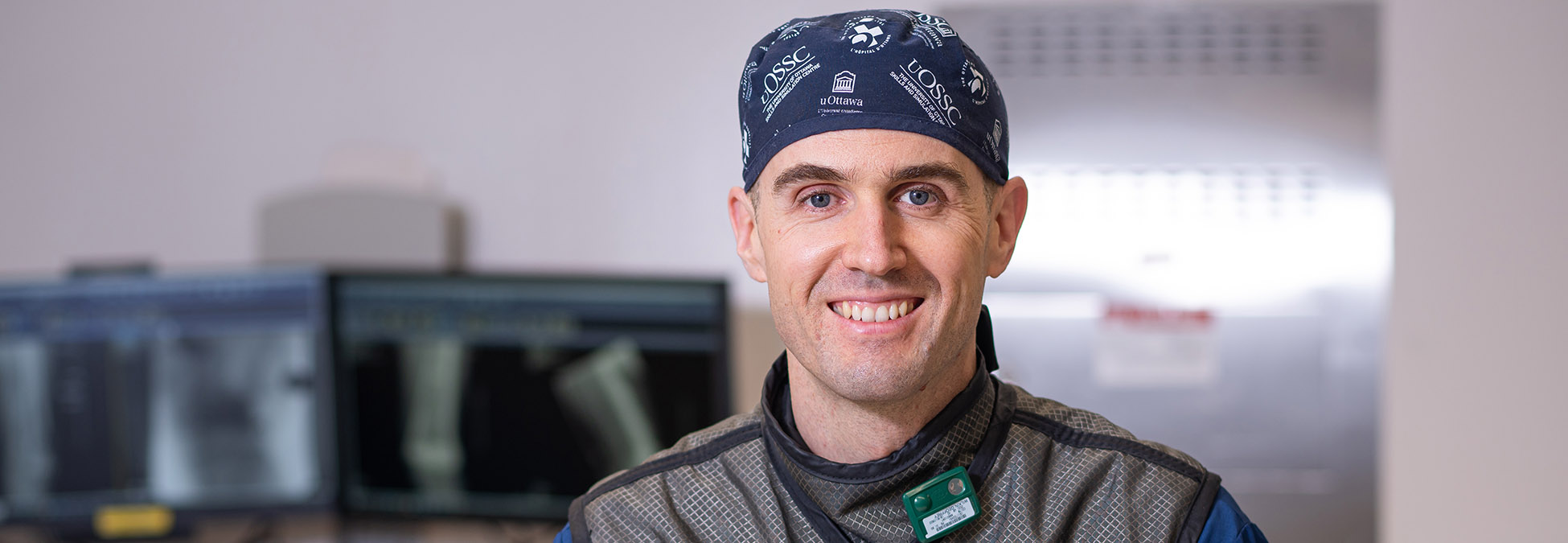
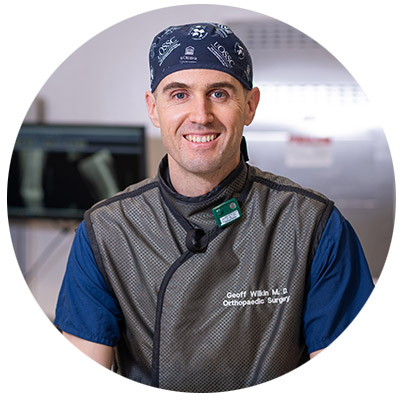
Meet orthopaedic surgeon Dr. Geoffrey Wilkin

When you break a bone, there’s a small window of opportunity to set it up to heal properly. No one knows this better than Dr. Geoffrey Wilkin, an Orthopaedic Trauma surgeon at The Ottawa Hospital. If a patient comes in with a traumatic injury, Dr. Wilkin knows he needs to come up with a plan, and fast. A properly aligned and healed bone can mean a world of difference for a patient’s recovery and restoring function in the affected area.

After an early interest in exercise science and an undergraduate degree in kinesiology, Dr. Wilkin became fascinated by the mechanism that allows bones to heal. Read on to learn more about these mechanisms and hear about his first encounter with orthopaedics at just 12 years old.

Q: Were you always drawn to medicine, and specifically orthopaedics?

A: As I’ve reflected on my career arc, there is one thing that might have had a bigger impact than I initially thought. When I was about 12, my younger sister was hit by a car and broke her leg.

She had surgery, so she had a big cast and pins sticking out of her leg. They had home care nurses coming in that changed her dressings. I remember thinking it was fascinating.

It’s funny, I have a distinct memory of one of her first follow up visits. We were looking at the X-ray and saw there was new bone forming; the bone had already started healing. It was my first introduction to this fascinating ability of our skeleton to heal itself.

There was nobody in my family who was medical, but towards the end of high school, I had it in my head that I wanted to be a doctor. I don’t remember if there was an exact moment, but I took a course on how our bodies work and function, and it spurred me to my undergrad degree in kinesiology, the science of human movement, at McMaster University. Then, I went straight into med school at Queen’s University.

Dr. Wilkin with his spouse.

Q: As an orthopaedic surgeon why did you choose to work at The Ottawa Hospital?

A: My connection to Ottawa started early and sort of by chance. It was the summer after my second year of medical school, and my girlfriend at the time, who is now my spouse, was in law school at the University of Ottawa. We had been commuting back and forth through all those years, and I wanted to spend the summer in Ottawa to have more time with her.

I knew I wanted to get into orthopaedics at this point, so I went to the uOttawa faculty list and saw someone whose primary area of interest was orthopaedic trauma and upper extremity surgery. I thought, “That sounds kind of interesting. I’m just going to email them and see if they’ve got any research I can do as a med student.”

That someone was Dr. Steve Papp, here at The Ottawa Hospital, and he said they could find a project for me. I came up and started working with him and Dr. Allan Liew, who’s also in trauma, and we really hit it off. I just found it fascinating and learned a ton working with them. They became great mentors and certainly supported me getting into orthopaedics.

It was apparent to me at the time that the orthopaedic program here had a lot of strengths. Ottawa is big enough that we see a huge range of pathology — traumatic injuries, joint reconstruction, oncology, spinal issues, pediatric cases. For someone looking to have a well-rounded residency training, Ottawa covers all those bases. I’m grateful to now be able to contribute to the residency program that trained me.

"Trauma care is really a team sport, and a well-functioning team is critical. We have a particularly strong group of trauma specialists."

After my fellowship training in New York City, I had the opportunity to stay and work there but chose to come back to Ottawa, because I thought it would be a great fit for my career and my family. As the only trauma centre serving the National Capital region, eastern Ontario, and Nunavut, I knew there would be no shortage of challenging injuries I could help treat, and this would translate into a rewarding and fulfilling clinical practice. Also, our division had recently established a research chair in regenerative orthopaedic surgery, which I knew would provide great collaborative research opportunities to improve our treatment of challenging fracture-related issues.

But the decision to come back on staff was ultimately about the people I would get to work with. I knew we had a great group of orthopaedic surgeons I would be joining. Trauma care is really a team sport, and a well-functioning team is critical. We have a particularly strong group of trauma specialists at the Civic Campus. My early mentors are now my partners, and we always support each other. We also have excellent nursing staff, physiotherapists, imaging technologists, and other allied health professions, who are all working towards a common goal. This makes for a great work environment, and I know this translates into world-class fracture care.

Q: What is the most interesting thing you’ve learned as an orthopaedic surgeon?

A: The most interesting thing I’ve learned, and I think this speaks to a perception a lot of people have, is that bones are not an inert part of your skeleton. We have this perception that bone is this hard substance that just sits there and holds our body up, but it’s really a living, dynamic tissue. It has amazing reparative potential, and it’s one of the only tissues in the body that heals without a scar.

As trauma surgeons, we have to harness that potential, that living aspect of the bone, and respect it. Orthopaedics gets a bad rap as being just carpentry — and there is a lot of that — but it’s also gardening. You have to nurture this living tissue and try to find the right mix of getting the mechanical properties of the bone to work together with its biologic properties.

My role as a surgeon is to guide the bone to do what it knows how to do.

"You have to nurture this living tissue and try to find the right mix of getting the mechanical properties of the bone to work together with its biologic properties."

Q: You worked on Travis Vaughan’s case. What made it so unique?

A: Travis had a very severe injury to his femur due to his snowmobiling accident. In addition to a bad fracture, he also had bone loss, which poses a particularly unique surgical problem.

When Travis was referred to me, we initially thought the task was simply rebuilding the bone loss, but we also realized it wasn’t as well aligned as it could be, and we needed to address that to make sure his range of motion was maintained. He thought he was going in for a 90-minute procedure, and I had to break the news that this was probably going to be more of a five-to-six-hour procedure.

Early after people’s injuries is the best time to get it perfect. The window of opportunity to get it right is small. Anything that comes after is more difficult to deal with.

The other challenge in cases like Travis’s is that we can do this big surgery, but we don’t know whether we’ve won for months. At each follow-up visit, we’re seeing how he’s doing, we’re watching X-rays for signs of bone healing, but often on an injury like his, it’s a year or more to know if we’re in the clear.

Fortunately, he did well, and we were able to eventually declare victory on his injury.

Q: The Ottawa Hospital is currently working towards the creation of a new, state-of-the-art health and research centre to replace the aging Civic Campus. What will this new hospital mean for your patients?

A: I’m certainly excited for the New Campus Development. I’ve been involved in some of the planning for the orthopaedic clinics, where we will have new clinic space with lots of rooms to deal with the increased patient population. The demand for orthopaedic care grows every year, and we need to ensure we have the capacity to meet people’s needs.

The new campus will be a state-of-the-art trauma centre. There will be an integration of trauma services, including a roof-top helipad with an elevator that goes right to the trauma bays, the emergency department, and the operating rooms. That integration is going to be critical for patients with the most severe injuries; it saves precious minutes.

Orthopaedics is just one piece of the puzzle; multiple services need to be integrated, and the better we can put them together in one spot, the better care we can provide for patients.

"Orthopaedics is just one piece of the puzzle; multiple services need to be integrated, and the better we can put them together in one spot, the better care we can provide for patients."

Q: What would we find you doing when you aren’t at the hospital?

A: I love spending time with my family. My two young kids bring a lot of joy to my life. I’ve also really taken to mountain biking. I get out in the summer whenever I can and do fat biking in the winter, which is way more fun than I expected it to be. I also enjoy snowboarding and skiing. If I had more time, I really do like cooking, but sometimes it’s hard to find the time.

Dr. Kirsty Boyd

The first recorded mention of plastic surgery was found in an Egyptian medical text that dates back to 1600 BCE! In it, there are instructions for fixing a broken nose. Plastic surgery has come a long way since then, but it is a great example of reconstructive surgery, which, along with cosmetic surgery, makes up the two main types of plastic surgery. While reconstructive surgery aims to repair or improve the functioning of part of a body, cosmetic surgery aims to change the appearance of a body part. Within those subcategories, there is a huge range of procedures. The Ottawa Hospital’s Plastic Surgery Program Director Dr. Kirsty Boyd knows how varied plastic surgery can be, and that’s part of what initially drew her to it. Read on to learn more about why she chose plastics, some of her most complex cases, and what she’s excited about in her field.

Q: When did you realize you wanted to become a doctor, and how did you end up as a plastic surgeon?

A: I honestly can’t remember a time when I didn’t want to be a doctor. I come from a family of physicians in all disciplines. There are stories about me rounding with my parents on the weekends, climbing right up on patients’ beds. When they moonlighted as residents, they used to sometimes take me with them, and I would colour or read at the nurses’ station. There are even photos of me picking up sponges while my parents were working — which could never happen now! But I never really knew what discipline I would practice in until the summer after my first year of medical school, when I rotated around working with friends of my parents. I spent one day in the operating room with Dr. Martin Lacey watching him operate on a combination of a cleft lip, a burn, a hand, and a breast case and decided that day that I would be a plastic surgeon.

Q: When someone hears “plastic surgery,” they might think only of cosmetic surgery. Why is plastic surgery a critical field in healthcare?

A: Cosmetic surgery is an important part of plastic surgery, but it only represents a small portion of what we actually do. We restore form and function to patients in all areas, including hands and wrists, burns, craniofacial cases, nerves, skin cancers, pediatrics, traumas, and complex wounds. We are the “surgeon’s surgeon,” and we literally operate in combined cases with every single other surgical discipline, often getting involved to solve difficult problems and rearrange and reconstruct tissue. Plastic surgeons need to know anatomy from every part of the body. We operate on every single type of tissue (bone, cartilage, nerve, muscle, skin etc.) and in every area. It isn’t infrequent for people to be surprised to hear that I am a plastic surgeon and for them to say that they didn’t realize that plastic surgeons do reconstruction too.


Q: You worked on Karen Toop’s case following a severe injury from a snow plow. What made her case so incredibly challenging?

A: I was only three weeks into my surgical practice at The Ottawa Hospital when Karen sustained her injuries. The extent of her injuries was absolutely catastrophic, and she is very lucky to be alive. Part of what made her case so challenging is that she lost so much, and we were trying to provide her with as much function as possible with very little to work with. Karen truly required a multi-disciplinary effort, and her team involved specialists from plastic surgery, orthopedic surgery, vascular surgery, physiatry, ICU, general surgery, trauma surgery, and physiotherapy. She was an example of people coming together and applying rare and complicated surgical techniques in a novel situation. It was also an opportunity for me personally to be mentored by an amazing senior colleague — especially at such an early point in my surgical career.

Q: You also did the first nerve transfer surgery to restore upper extremity function in a spinal cord injury in Canada on patient Timothy Raglin. How does that surgery reflect the groundbreaking work happening at The Ottawa Hospital?

A: Tim approached me after reading about a surgery that had been performed by my fellowship supervisor, Dr. Susan Mackinnon, at Washington University in St. Louis, Missouri. At the time, this was a novel application of a strategy to re-wire nerves after injury — in this case, using a redundant nerve above the level of spinal cord injury to power a non-functioning nerve below the level of injury. I was very hesitant, as I had never operated on this patient population before, and the potential for downgrading function in a patient with tetraplegia — meaning they have paralysis in all four limbs below the neck — was very worrisome. Dr. Mackinnon volunteered to come to Canada to assist me with the surgery. She and her colleague came at their own expense and we completed the nerve transfers together. I feel very fortunate to have had the support of my division head and of the chief of surgery to bring this groundbreaking work to Ottawa and to have done the first surgery of its kind in Canada.

Q: What is the most exciting research happening in the field of plastic surgery right now/where is it heading?

A: Personally, I find the research in nerve surgery, both basic science and clinical, the most exciting. Clinically, indications for nerve transfers are exploding, and function is being restored to injuries that were previously not considered operable. In addition, newer techniques have allowed us to expand our procedures to operate earlier, and on more patients, to achieve excellent results. Currently nerve transfers are being performed on patients with spinal cord injuries, pinched nerves in their spines, peripheral nervous system disorders, and other nervous system conditions — and these transfers are occurring in both upper and lower extremities. At The Ottawa Hospital, Dr. Gerald Wolff and I regularly perform research and contribute to this literature and run one of the largest peripheral nerve trauma clinics in the county. From a basic science perspective, new knowledge is allowing for improved nerve recovery and better outcomes.

Q: As a plastic surgeon, why did you choose to work at The Ottawa Hospital and what is the most gratifying part of your job as a plastic surgeon at The Ottawa Hospital?

A: Ottawa provided a perfect opportunity for me. There was no one here at the time doing complex peripheral nerve reconstruction in plastic surgery. I had the opportunity to found the Peripheral Nerve Trauma Clinic with my good friend and excellent colleague, Dr. Gerald Wolff, and to truly build one of the largest and most successful nerve programs in Canada. I had the opportunity to join Canada’s newest residency training program, to help shape the program from infancy, and then ultimately to take over the position as Residency Program Director. Most importantly, I was able to work with excellent colleagues who I consider to be both mentors and friends. This has enabled me to tackle the really complex cases, like Karen’s and Tim’s, and to feel supported while doing so. The work we have done in these areas has been recognized nationally and internationally, and I feel very proud of what we have accomplished. Without doubt, the most gratifying part of my job as a plastic surgeon at The Ottawa Hospital has been to follow our patients along and see them regain function following devastating injuries.